
.png?width=750&height=750&name=Thought%20Leadership%20(3).png)


.png?width=750&height=750&name=Webinar%20Linkedin%201x1%20(3).png)




.png?width=1200&height=1200&name=Webinar%20Linkedin%201x1%20(6).png)

.png?width=750&height=750&name=Webinar%20Linkedin%201x1%20(11).png)
.png?width=2000&name=3x2%20Images%20(4).png)

.png?width=1200&height=1200&name=Webinar%20Linkedin%201x1%20(10).png)

If your team only finds out a supplier's ISO certificate expired when:
-
an auditor asks for it
-
a customer questionnaire lands in your inbox
-
or something actually goes wrong
...you are not alone.
In a lot of organisations, supplier risk and compliance are still handled with:
-
manual checklists
-
scattered folders and email attachments
-
one person "keeping an eye" on expiry dates
-
occasional one off ESG or financial checks when someone remembers
Meanwhile, procurement is being handed more responsibility for compliance, sustainability and ESG "because you own suppliers", without being given tools to manage it. Everything falls on procurement's lap, but the ways of working are reactive by design.
This post looks at:
-
how reactive supplier risk and compliance shows up day to day
-
why regulation and stakeholder pressure make this unsustainable
-
what a proactive model looks like
-
how Kodiak Hub helps you go from "we find out by accident" to "we knew weeks ago and already acted"
The Reality Today: Reactive Risk, Missing Data, Unhappy Auditors
Here is what teams describe when they say "we are reactive".
%20(62).png?width=1917&height=1085&name=Blog%20Images%20etc%20(1917%20x%201085%20px)%20(62).png)
1. Documents and certifications are not actively monitored
-
ISO, IATF, HACCP, safety certs, insurances and policies are collected once, then parked in folders.
-
Expiry dates are in someone's spreadsheet, if at all.
-
No system alerts anyone when something lapses or is missing.
You only discover the gap:
-
during an audit
-
because a customer asks for proof
-
or after an incident, when Legal or Compliance goes hunting for documentation that does not exist or is out of date.
2. ESG and human rights due diligence is ad hoc
ESG questionnaires are often one offs:
-
sent during onboarding and maybe never updated
-
stored as PDFs with no structured data
-
disconnected from actual risk tiering or commercial decisions
At the same time, supply chain due diligence rules around human rights and environment are tightening globally. EU's Corporate Sustainability Due Diligence Directive, for example, requires in scope companies to identify and address adverse human rights and environmental impacts across their value chains. (European Commission)
Doing that with static spreadsheets and PDFs is not realistic.
3. Financial and cyber risk checks are one time snapshots
Many teams:
-
run a credit check once during onboarding
-
maybe look at a cyber questionnaire during a big IT sourcing event
-
never update these systematically over time
If a vendor's financial rating drops or their security posture deteriorates, you only notice when service degrades, invoices go unpaid, or there is a breach in the news.
4. Procurement owns the pain without the tools
A familiar pattern:
-
Compliance, Legal, Sustainability and Security point to procurement when risk issues involve suppliers.
-
Procurement is expected to "put something in place", but only has email, Excel and generic S2P modules.
-
Everyone is under pressure from regulators, customers and the board to "get proactive" on supply chain ESG and risk. (lfmeab.org)
That is a hard circle to square without dedicated supplier risk and compliance tooling.
Why Being Reactive Is No Longer An Option
There are at least three reasons the "we'll deal with it when it happens" approach is breaking.
1. Regulation is moving from soft expectations to hard obligations
Across regions you now see:
-
Supply chain ESG due diligence laws (CSDDD and similar frameworks) that expect clear processes, supplier screening and remediation, not just a code of conduct on your website. European Commission+1
-
Security regulations like NIS2 that explicitly mention supply chain security, meaning you must assess and manage risks introduced by suppliers and service providers, and often embed requirements into contracts. (DLA Piper)
These do not say "ask a few questions once". They assume you have ongoing visibility and controls.
2. ESG and supply chain risk are now board level topics
Recent research shows:
-
supply chain due diligence is seen as one of the most impactful systemic changes in global trade and supply chain management
-
ESG in supply chains is a growing factor in risk assessment, brand value and access to markets. (Thomson Reuters)
Boards, investors and customers are asking "How do we know our suppliers are credible and compliant?" That requires more than a shared drive full of PDFs.
3. The cost of surprises is getting higher
When you find out about:
-
forced labour concerns
-
environmental violations
-
massive safety non conformances
-
or a financially distressed supplier
...after the fact, it hits revenue, margin, reputation and sometimes personal liability for directors.
In short: being proactive is no longer a nice to have. It is risk management.

What Proactive Supplier Risk & Compliance Looks Like
A proactive model has a few recognizable building blocks.
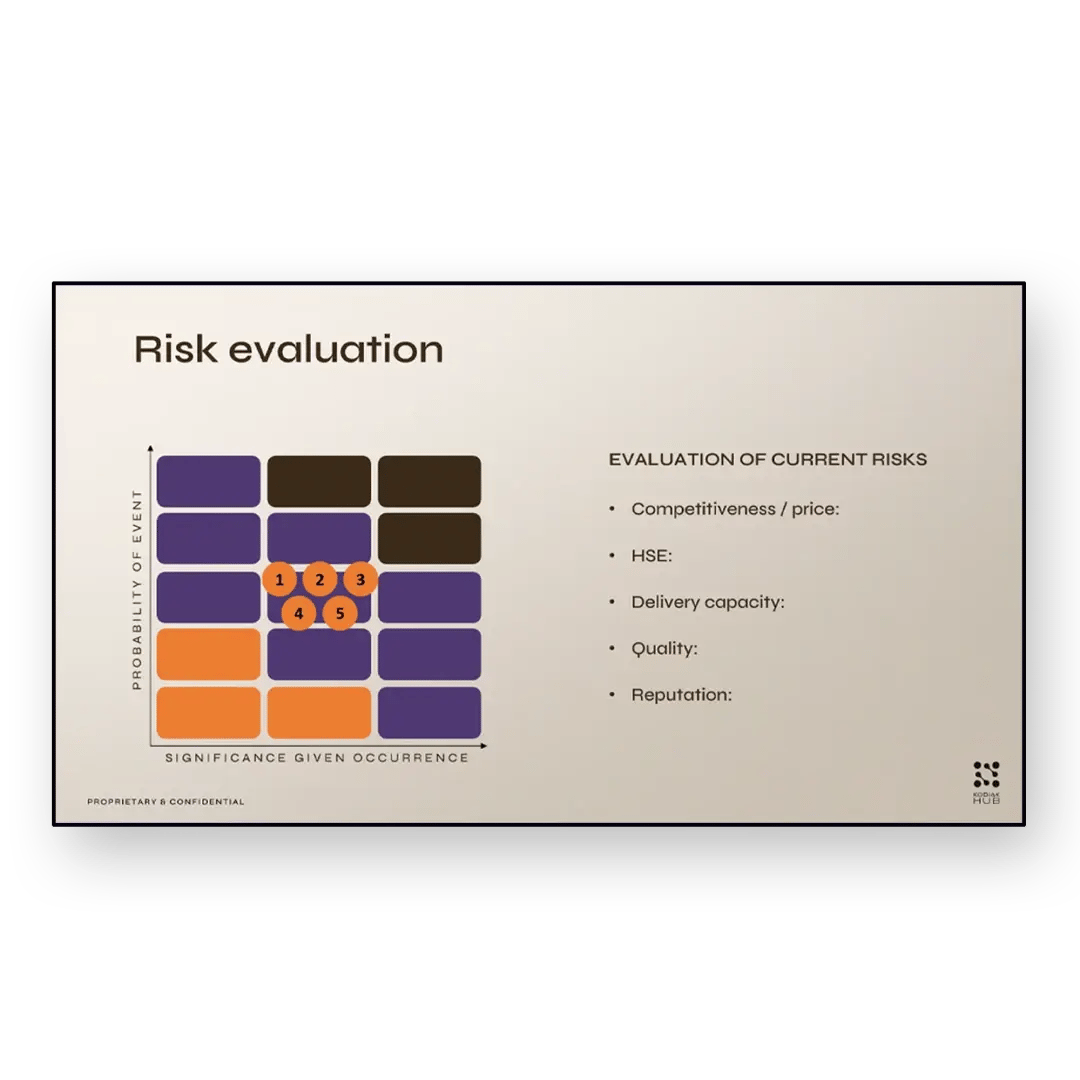
1. Risk based segmentation
Not all suppliers are equal. You define:
-
risk tiers (critical, high, medium, low) based on spend, category, geography, ESG exposure, cyber sensitivity and substitution difficulty
-
what checks, evidence and review cadence are required for each tier
Critical suppliers get deeper onboarding, more frequent reviews and richer monitoring. Low risk suppliers get a lighter approach. Learn more about supplier segmentation here.
2. One place for risk and compliance data
Each supplier has a single profile that holds:
-
ID and ownership structure
-
sites and categories
-
certificates, insurances and policies with expiry dates
-
ESG and human rights declarations
-
risk assessments and ratings
-
financial and security risk insights where relevant
-
audit history and CAPAs
No more hunting across drives and tools.
3. Document and certificate lifecycle automation
The system:
-
tracks expiry dates
-
sends reminders to suppliers and internal owners in advance
-
flags non compliance automatically
-
can trigger holds or re approvals if evidence is missing
You stop "remembering" expiries and let workflow handle it.
4. Continuous monitoring and alerts
Risk is not a one time project. Proactive teams:
-
integrate external feeds and internal signals (incidents, quality issues, delivery problems)
-
watch for rating changes and negative news on critical suppliers
-
use dashboards and alerts to prioritise where to intervene
You learn about problems early, not when a line stops or a newspaper calls.
5. From issues to actions, not just reports
Findings are only useful if they lead to change. A proactive setup links:
-
issues and non conformances
-
corrective and preventive actions (CAPA) with owners and deadlines
-
re evaluation, share of business decisions and contract changes
That is how you move from "we saw the risk" to "we addressed it and can prove it".
How Kodiak Hub Helps You Go From Reactive To Proactive
This is exactly the gap Kodiak Hub was designed to close for procurement and supply chain teams.
Centralised supplier risk and compliance profiles
Kodiak Hub gives you a 360 supplier record where you can store and structure:
-
all certificates, insurances and policies with their expiry dates
-
ESG and due diligence questionnaires and answers
-
risk assessments, audits and findings
-
performance data like OTIF and quality incidents that often overlap with risk
Everyone works from the same view, instead of assembling it from mailboxes and shared drives. Learn more about why you should consolidate your supplier data.
Automated document and certification lifecycle
With Kodiak Hub you can:
-
define which documents are required per risk tier, category or region
-
collect them directly from suppliers through a portal
-
track expiry dates automatically
-
send reminders before they lapse
-
flag suppliers as non compliant if critical evidence is missing
This turns "we discovered expired documentation by accident" into "we knew a month in advance and the renewal is already in progress".
Built in due diligence and ESG workflows
You can configure:
-
onboarding and re qualification flows by risk tier
-
ESG, human rights, security and quality questionnaires
-
approval steps across procurement, quality, compliance, legal or sustainability
-
evidence checks, with clear audit trails
This gives you a structured process that aligns with emerging due diligence expectations and is easy to show to auditors, customers or regulators.
Early warning on financial and operational risk
Kodiak Hub can combine:
-
internal signals such as delivery performance, quality issues and audit scores
-
external risk insights where available (for example, financial ratings or news)
So your team sees a risk picture that moves over time, not a static snapshot from three years ago.
From findings to CAPA and governance
Risk findings and non conformances in Kodiak Hub can be turned into:
-
CAPAs with owners, deadlines and required evidence
-
follow up tasks and re evaluations
-
clear views of open vs closed actions
When the board or auditors ask "What did we do about this risk", you have an answer and a record.
How To Start Moving From Reactive To Proactive
You do not need a giant transformation project to change direction. A simple path could look like this:
-
Pick 50 to 100 critical suppliers across a few key categories.
-
Define a basic risk tiering model and minimum document set for those suppliers.
-
Set up Kodiak Hub to hold their risk and compliance profiles and collect missing documentation.
-
Configure reminder workflows for expiries and a light re evaluation cadence.
-
Add one or two ESG or due diligence questionnaires that align with your key regulations or customer expectations.
-
Review results after one or two quarters: fewer surprises, better documentation, clearer visibility.
From there you can expand to more suppliers, more categories and deeper risk coverage.
If your current story is "we are reactive on supplier risk and compliance and it has to change", you are in the same place as many teams talking to us. The good news is that with the right platform and some focused steps, you can move to a model where:
-
expiries do not catch you off guard
-
due diligence is structured, not improvised
-
ESG and regulatory expectations are built into your workflows
-
procurement is equipped to carry the responsibility it has been given
Kodiak Hub is built to help you make that shift.