
.png?width=750&height=750&name=Thought%20Leadership%20(3).png)


.png?width=750&height=750&name=Webinar%20Linkedin%201x1%20(3).png)

.png?width=1200&height=1200&name=Webinar%20Linkedin%201x1%20(6).png)

.png?width=750&height=750&name=Webinar%20Linkedin%201x1%20(11).png)
.png?width=2000&name=3x2%20Images%20(4).png)

.png?width=1200&height=1200&name=Webinar%20Linkedin%201x1%20(10).png)

CRM in supply chain management: Do you need a CRM or a SRM?
When it comes to relationship management tools, CRM is widely recognized as the go-to solution. Designed to help businesses build stronger, more profitable connections with their customers, CRMs are ideal for tracking leads, managing customer interactions, and enhancing customer loyalty. However, in the world of supply chain management, the needs are often different. Many supply chain professionals find themselves wondering if a CRM system would be the right fit, but here’s the twist: they may actually need a Supplier Relationship Management (SRM) system instead. Let’s explore why.
What is CRM in Supply Chain Management?
CRM (Customer Relationship Management) systems are primarily designed to streamline and optimize interactions with customers—the individuals or businesses buying from you. For sales, marketing, and customer service teams, CRM is indispensable. However, in supply chain contexts, it doesn’t always address the unique needs of managing supplier relationships.
In supply chain management, where maintaining a smooth, efficient process from sourcing materials to delivering products is essential, CRM often falls short. Supply chains rely heavily on supplier performance, compliance, and reliability. While CRM systems excel at managing external customer relationships, they don’t offer the tools needed to handle the complexities of working with suppliers, vendors, and contractors that form the backbone of a supply chain.
Why Supply Chain Management Needs SRM, Not CRM
An SRM (Supplier Relationship Management) system, on the other hand, is built specifically to enhance and manage relationships with suppliers. While CRM tools are ideal for customer-facing activities, SRM is designed to address the unique needs of procurement and supply chain teams. Here’s how SRM addresses these areas:
.png?width=1917&height=1085&name=Blog%20Images%20etc%20(9).png)
Supplier Performance Tracking
SRM systems allow businesses to track and evaluate supplier performance over time. Unlike CRM, which focuses on sales metrics and customer interactions, SRM tracks delivery timelines, quality compliance, and cost-effectiveness, all of which are crucial for maintaining a reliable supply chain. Read more on how to enhance Supplier Performance Management here.
Risk Management
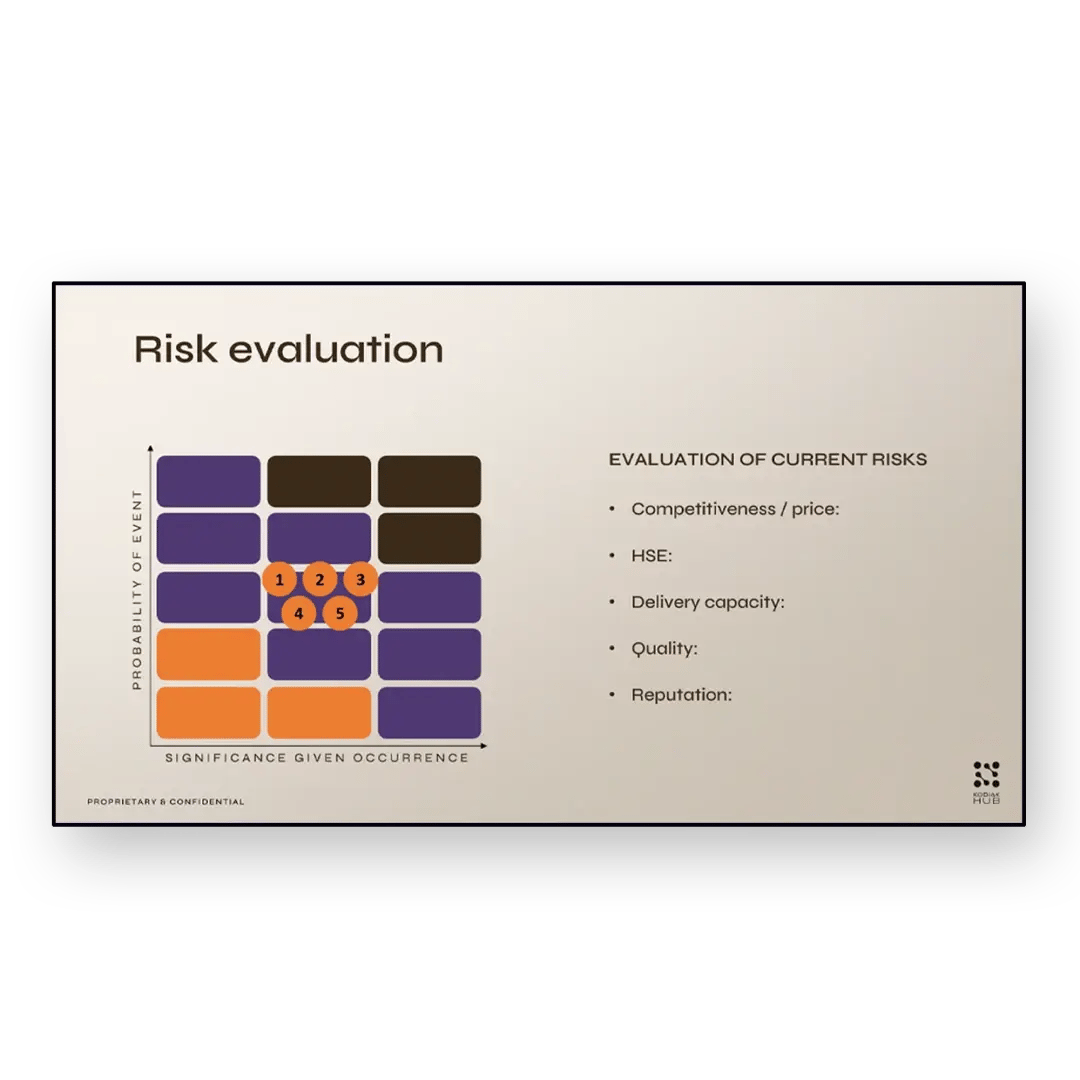
Supply chains face a host of risks—from supplier non-compliance to geopolitical disruptions. SRM platforms are equipped to assess and mitigate risks by giving a clear picture of each supplier’s stability, reliability, and contingency plans. CRM systems lack this functionality, as they aren’t built to address these procurement-specific risks. Learn how to manage supply chain risk with ease.
Collaboration and Partnership Development
SRM emphasizes collaboration, helping businesses work closely with suppliers to align goals and drive innovation. Whether it's co-developing new products or improving processes, SRM promotes strong partnerships beyond the transactional focus of CRM. Learn more about how to improve supplier collaboration here.
Cost Management and Efficiency
SRM systems provide insights into cost structures, helping businesses identify savings opportunities through better contract negotiations and pricing agreements. CRM platforms, meanwhile, concentrate on maximizing revenue rather than controlling procurement costs.
Compliance and Sustainability
Today’s supply chains demand transparency and compliance, particularly around ethical sourcing and environmental responsibility. SRM tracks supplier adherence to regulatory and sustainability standards, ensuring that companies can meet compliance requirements. CRM systems are not equipped to monitor these critical compliance factors for suppliers. Check out how to ensure Supplier Compliance and ESG & Sustainability here.
The Takeaway: SRM or CRM for Supply Chain Management
While CRM is essential for managing customer relationships, it lacks the targeted capabilities that supply chain management teams need to effectively manage supplier relationships. Supply chain professionals often find that an SRM system is a more fitting solution, offering the tools to enhance supplier performance, mitigate risks, and foster strong partnerships that go beyond simple transactions.
When deciding between CRM and SRM, it’s all about understanding the nature of your relationships. For outward, customer-facing relationships, CRM is perfect. But when it comes to optimizing your supplier network, SRM is the specialized tool that ensures a resilient and efficient supply chain. If you’re exploring CRM for supply chain management, consider the unique benefits of SRM—it might be the solution you actually need. Check out this post which elaborates on the difference between CRM vs SRM.
FAQ about CRM for Supply Chain Management
What is CRM in SCM?
In Supply Chain Management (SCM), CRM stands for Customer Relationship Management. It refers to the strategies and technologies used to manage the "downstream" portion of the supply chain—the interactions with the people who buy your products.
Why is CRM important in managing supply chains?
CRM can act as a "demand signal" for the entire supply chain. Which could be critical because:
Forecasting Accuracy: It provides real-time data on customer buying patterns, allowing the supply chain to adjust production and inventory levels.
Order Fulfillment: It ensures that the "Last Mile" of the supply chain meets customer expectations for speed and transparency.
Can you use a CRM like Salesforce to manage suppliers?
While you can customize a CRM to store supplier names, it is generally not recommended for mature supply chains. CRMs lack the specialized workflows required for procurement, such as "Request for Proposals" (RFPs), supplier onboarding/vetting, and performance scorecards. Using a CRM for suppliers usually results in a "clunky" system that lacks the deep analytical tools needed for spend management.
Why is an SRM software more optimal than a CRM for managing supply chains?
While a CRM manages the output (customers), SRM (Supplier Relationship Management) manages the input (suppliers). An SRM is more optimal for supply chain operations because:
Direction of Flow: CRMs are built for sales and revenue; SRMs are built for procurement, risk, and compliance.
Complexity of Data: SRMs handle complex supplier data like ESG certifications, tiered risk mapping, and multi-year contracts—fields that standard CRMs aren't designed to track.
Value Creation: An SRM focuses on reducing costs and mitigating supply disruptions, whereas a CRM focuses on increasing sales.