
.png?width=750&height=750&name=Thought%20Leadership%20(3).png)


.png?width=750&height=750&name=Webinar%20Linkedin%201x1%20(3).png)


.png?width=1200&height=1200&name=Webinar%20Linkedin%201x1%20(6).png)

.png?width=750&height=750&name=Webinar%20Linkedin%201x1%20(11).png)
.png?width=2000&name=3x2%20Images%20(4).png)

.png?width=1200&height=1200&name=Webinar%20Linkedin%201x1%20(10).png)

Supplier quality improvement is the process of systematically reducing defects, delays, and non-conformances across your supply base by setting clear requirements, qualifying suppliers against them, measuring the right KPIs, auditing critical suppliers, and closing corrective actions fast. In practice, the strongest programs move away from reactive firefighting and toward a proactive, collaborative system - which is exactly why Kodiak Hub connects onboarding, supplier performance, audits, and improvement actions in one workflow through its supplier quality management software.
That matters because supplier quality is not just about lowest price or final inspection. ASQ notes that supplier quality goes beyond purchase price and includes reliability, communication, and problem resolution, while ISO guidance warns against choosing critical suppliers only for economical price instead of their ability to consistently meet specification. (ASQ)
What supplier quality improvement actually means
Supplier quality improvement is not a one-time supplier cleanup project. It begins early, during product design, requirement-setting, and supplier selection, then continues through onboarding, monitoring, audits, and supplier development across the full relationship lifecycle. For the broader foundation behind this process, see our guide to supplier quality management.
In simple terms, the goal is to make supplier quality predictable. That means fewer incoming rejects, fewer repeat issues, stronger delivery reliability, clearer accountability, and faster improvement when something goes wrong. The companies that do this well treat procurement, quality, engineering, and operations as one team, not separate silos. (CIPS)
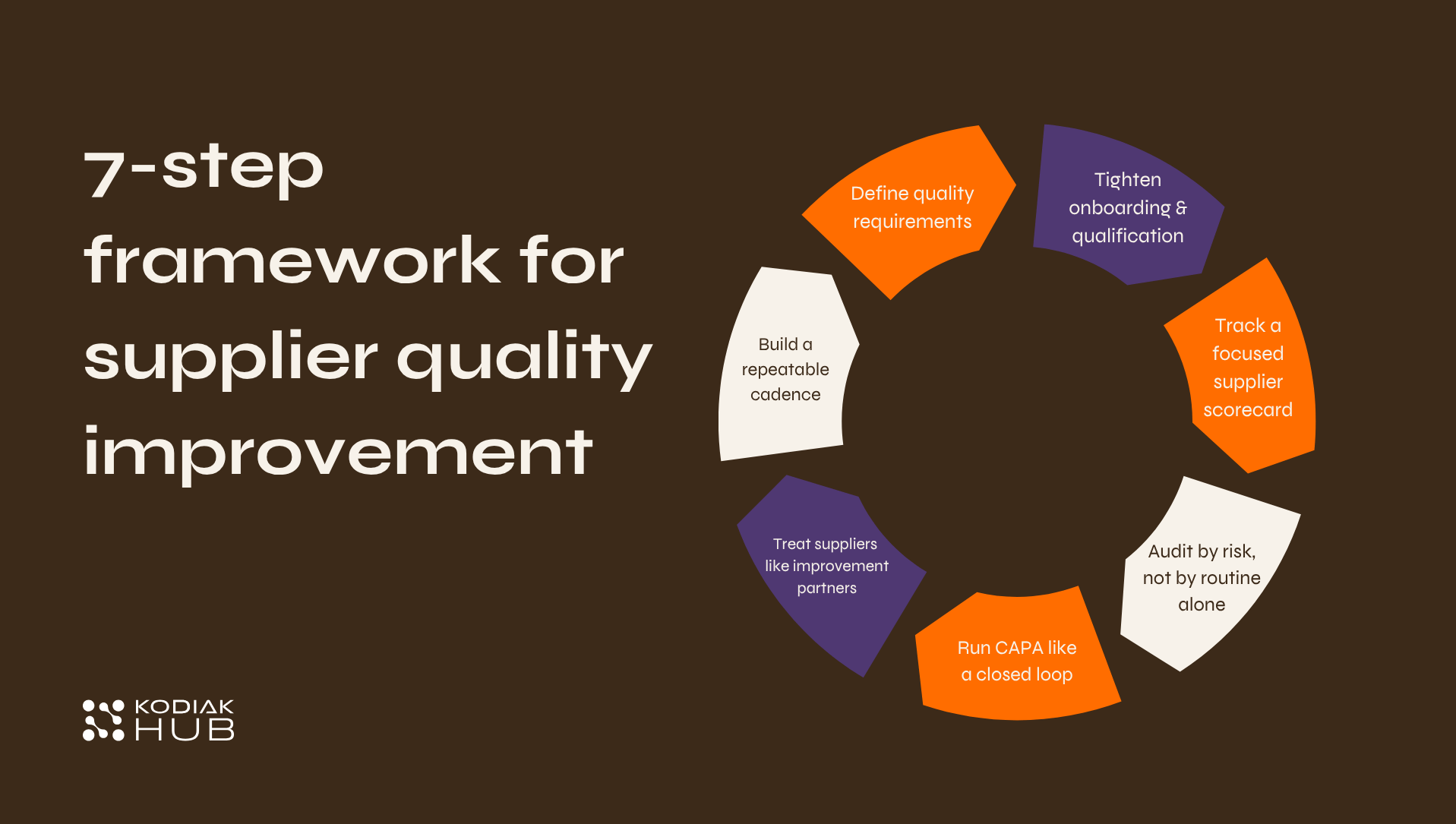
A 7-step framework for supplier quality improvement
1. Define quality requirements before you place the order
Supplier quality improvement starts before the first shipment arrives. ISO guidance emphasizes that procurement begins when specifications are prepared, purchase requirements are validated, and the degree of risk associated with the product or service is assessed. In other words, if requirements are vague at award stage, you are already creating future defects. (ISQ)
This is where many teams confuse sourcing with supplier quality. A supplier may be commercially attractive and still be a weak fit for critical quality requirements. Your article should make that point clearly: better supplier quality starts with better supplier selection criteria, better specs, and clearer expectations.
2. Tighten onboarding and qualification
ASQ recommends cross-functional supplier selection criteria, including past performance, quality system maturity, technical support, delivery capability, financial stability, and testing or on-site assessment where needed. That is exactly why supplier quality improvement usually starts with better qualification and onboarding, not just better inspection. (ASQ)
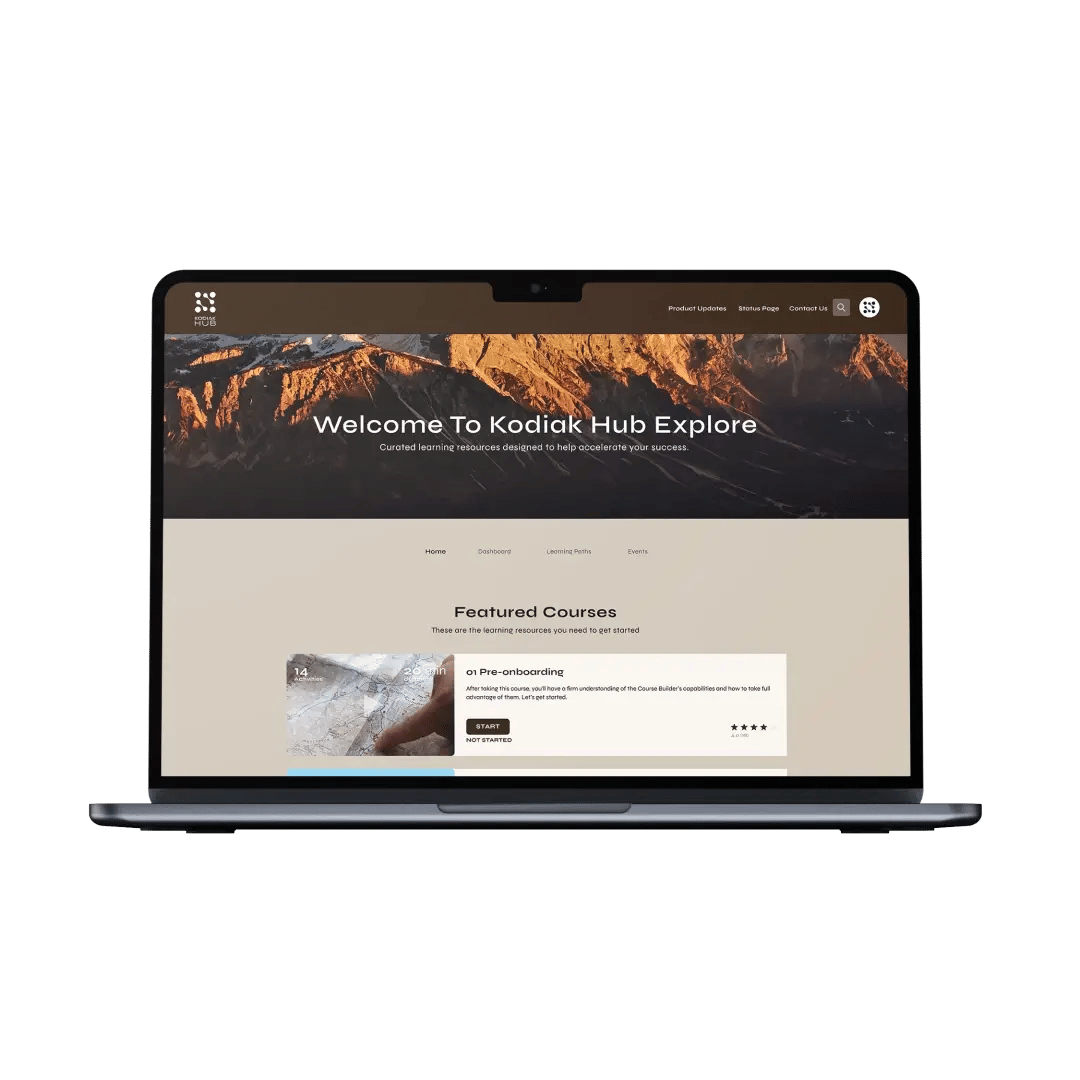
Here's how Kodiak Hub companies tighten Supplier Onboarding & Assessment, with automated workflows and self-assessments.
3. Track a focused supplier scorecard
CIPS recommends scorecards, metrics, and KPIs to monitor supplier performance, including product or service quality, incoming rejects, delivery accuracy, warranty claims, customer service, lead times, and commercial costs (CIPS). Kodiak Hub’s own KPI content adds practical procurement metrics such as OTIF, PPM, right-first-time, NCR rate, audit score, and corrective action SLA compliance.
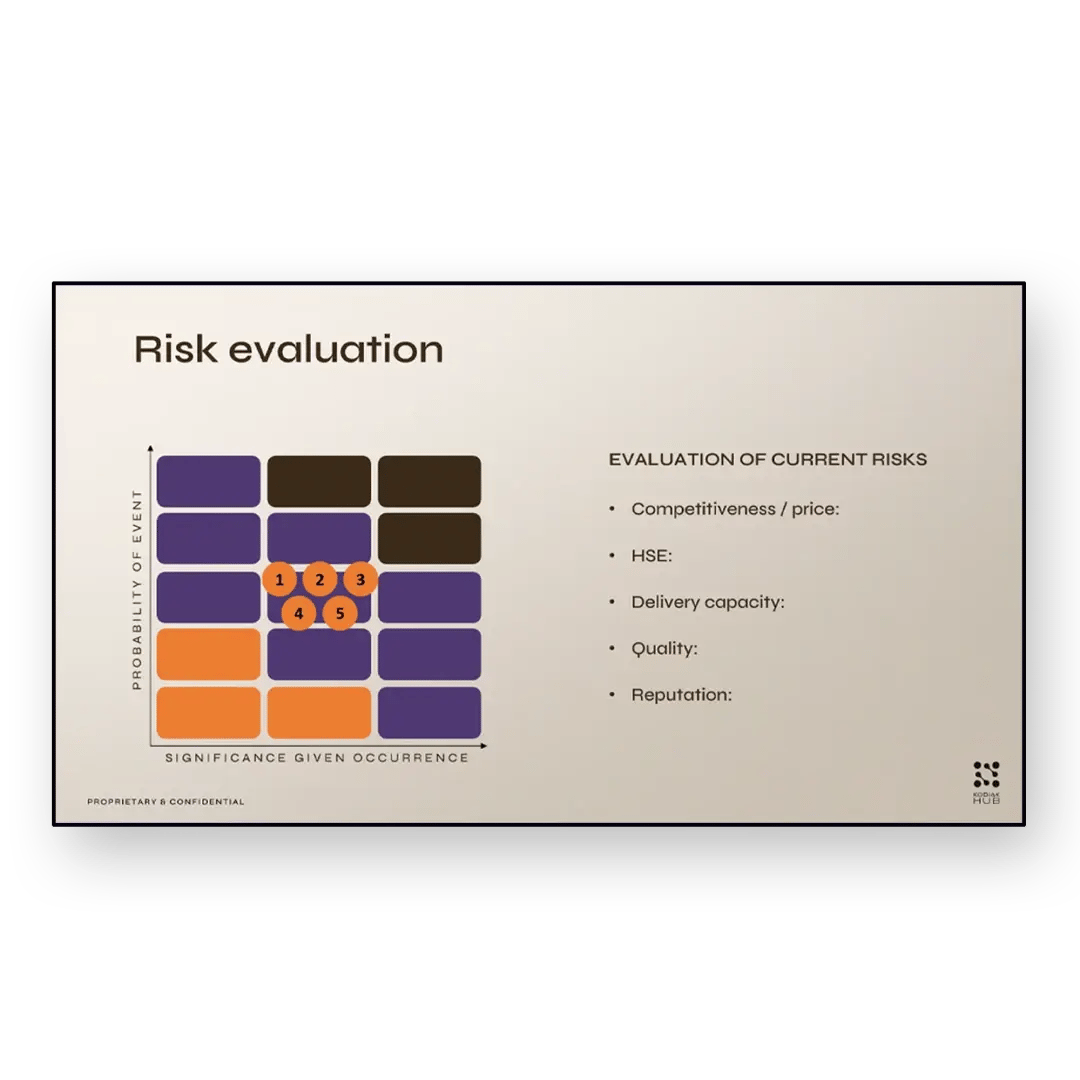
That means most teams do not need 40 metrics. They need a focused scorecard that answers: Are we receiving quality output? Is delivery stable? Are issues being resolved fast enough? Are problems recurring? Check out supplier performance management KPIs, and how Kodiak Hub's Supplier Performance Management software helps companies succeed with this.
4. Audit by risk, not by routine alone
ISO guidance is especially useful here. It points to approved supplier lists, effective performance monitoring, and risk-based thinking as core controls, but also says that list-based approval alone may not be enough. Organizations may need wider review of procurement, outsourcing, and supply-chain controls, especially for critical suppliers. ASQ also frames supplier auditing as part of continuous improvement, not just compliance theater. (ASQ)
That is the logic behind risk-based audits: critical suppliers deserve more scrutiny, higher-frequency review, and stronger follow-up. Learno more about this in Beyond the Checklist: Advanced Supplier Audit & Certification Tools and supplier audit automation tools instead of spreadsheets, and see how Kodiak Hub's software helps you with this here Supplier Audit Management.
5. Run CAPA like a closed loop, not a to-do list
A mature supplier quality improvement process does not stop at logging a defect. 21 CFR 820.100 offers a very strong CAPA model: analyze quality data, investigate causes, identify actions to prevent recurrence, verify action effectiveness, document the changes, and push the results into management review. Even outside regulated industries, that is a solid operating model.
Check out our piece on supplier quality assurance.
6. Treat suppliers like improvement partners
ASQ highlights the benefits of longer-term supplier partnerships, including less process variation, reduced need for constant monitoring, and better sharing of expertise and resources (ASQ). CIPS adds that suppliers should have access to the same information used to evaluate performance. That is a major shift: the best supplier quality improvement programs are collaborative, not purely punitive. (CIPS)
Check out Kodiak Hub’s Supplier Collaboration & Innovation module. It is designed for shared projects, action plans, communication flows, and progress monitoring, so improvement does not stall between audit report and supplier response.
7. Build a repeatable monthly and quarterly review cadence
Supplier quality improvement fails when reviews are ad hoc. (CIPS) points to stakeholder feedback, management support, and communication plans as important parts of supplier performance management, while Kodiak Hub’s own performance-process content recommends a structured cadence with defined thresholds, owners, and decision-oriented KPIs.
That is why this process should end with a cadence, not a dashboard. Monthly operational reviews catch quality drift early. Quarterly business reviews turn trends into supplier development actions. Check out our Supplier Performance Management Process: Templates & Cadence.
Common mistakes that slow supplier quality improvement
The biggest mistakes are predictable: choosing suppliers mainly on price, applying the same controls to every supplier regardless of risk, tracking too many metrics with no decisions attached, and keeping audits, CAPAs, and supplier data scattered across spreadsheets, inboxes, and shared folders. ISO, CIPS, and Kodiak Hub’s own content all point in the same direction: supplier quality improves faster when controls are risk-based, metrics are decision-oriented, and the data lives in one shared system.
How Kodiak Hub supports supplier quality improvement
Kodiak Hub’s value proposition fits this topic well because supplier quality improvement is inherently cross-functional. The platform brings together onboarding and self-assessments, supplier scorecards, audit management, collaboration workflows, CAPA tracking, and a shared supplier record so procurement, quality, supply chain, and suppliers all work from the same facts.

Conclusion
Supplier quality improvement is not about reacting faster to bad parts. It is about building a system that prevents bad parts, surfaces risk early, and helps suppliers improve with you over time. The companies that win here do five things well: define requirements clearly, qualify suppliers properly, measure the right KPIs, audit the right suppliers, and close the loop on corrective actions. Kodiak Hub is relevant because it connects those steps in one place instead of leaving them fragmented across teams and tools.
FAQ
What is supplier quality improvement?
Supplier quality improvement is the ongoing process of improving how suppliers meet your requirements for quality, delivery, and consistency. It usually combines qualification, monitoring, audits, corrective actions, and collaboration so supplier performance becomes more reliable over time.
Which KPIs matter most for supplier quality improvement?
The most useful KPIs are usually incoming rejects or PPM, right-first-time, delivery accuracy or OTIF, NCR rate, audit score, and CAPA closure-on-time. The right mix depends on your category and risk profile, but the KPI set should stay focused and tied to real decisions.
How often should suppliers be audited?
There is no universal audit frequency that fits every supplier. ISO guidance supports a risk-based approach, which means critical suppliers, high-risk categories, and suppliers with recurring issues should receive deeper and more frequent review than low-risk suppliers with stable performance.
Who should own supplier quality improvement?
It should be cross-functional. ASQ points to supplier selection and management involving purchasing, quality, engineering, and production, while CIPS emphasizes stakeholder feedback and management support. Procurement can lead the relationship, but quality improvement works best when multiple functions share ownership.
What is the difference between supplier quality assurance and supplier quality improvement?
Supplier quality assurance is about setting and checking the baseline - requirements, onboarding, assessments, controls, and compliance. Supplier quality improvement goes a step further by using scorecards, audits, CAPA, and supplier collaboration to raise performance over time and reduce recurrence.
How does software help supplier quality improvement?
Software helps by centralizing supplier data, automating onboarding and follow-up, connecting scorecards to audits and actions, and giving both buyers and suppliers visibility into progress. That reduces fragmentation and makes improvement work repeatable instead of manual.