
.png?width=750&height=750&name=Thought%20Leadership%20(3).png)


.png?width=750&height=750&name=Webinar%20Linkedin%201x1%20(3).png)

.png?width=1200&height=1200&name=Webinar%20Linkedin%201x1%20(6).png)

.png?width=750&height=750&name=Webinar%20Linkedin%201x1%20(11).png)
.png?width=2000&name=3x2%20Images%20(4).png)

.png?width=1200&height=1200&name=Webinar%20Linkedin%201x1%20(10).png)

Zycus is an established name in procurement technology, offering a broad source-to-pay platform that spans intake, sourcing, contracts, purchasing, supplier management, accounts payable, and procurement analytics.
For large organizations looking to standardize procurement across the source-to-pay process, that breadth can be valuable.
But breadth does not always mean fit.
Many procurement teams searching for Zycus alternatives are not simply looking for another large procurement suite. They are looking for something more specific:
A better way to manage suppliers after sourcing and contracting.
A better way to connect supplier performance, risk, quality, compliance, sustainability, documentation, audits, and improvement actions.
A better way to give procurement, quality, sustainability, and supply chain teams one trusted view of every supplier relationship.
That is where Kodiak Hub becomes a strong Zycus alternative.
Not because every company should replace Zycus entirely, but because many companies already have ERP, sourcing, purchasing, invoicing, or source-to-pay systems in place. What they lack is a dedicated supplier relationship management platform that connects fragmented supplier data and turns it into decisions.
What is Zycus?
Zycus is an integrated source-to-pay procurement platform. Gartner Peer Insights describes the current Zycus suite as combining intake management, agentic AI, and source-to-pay applications across sourcing, negotiation, contracting, procurement, and payment processes.
More broadly, Gartner defines a source-to-pay suite as an integrated set of tools for sourcing, contracting, requesting, procuring, receiving, and paying for goods and services. These suites typically combine upstream and downstream procurement activities within one modular cloud platform.
Zycus can therefore be a good fit when a business wants to standardize a wide range of procurement processes within one environment.
But when the priority is supplier relationship management, the question becomes slightly different.
It is not only:
“Can the platform support onboarding, sourcing, procurement, and payment?”
It is:
“Can our teams understand how each supplier is performing, what risks they create, which products they affect, what documents are missing, and what actions need to happen next?”
That is the gap many teams are trying to close when they search for Zycus alternatives.
Why companies look for Zycus alternatives
Most teams do not search for alternatives because Zycus has no value. They search because their requirements, technology landscape, or operating model point toward a different kind of solution.
Common reasons include:
- The business already has ERP, sourcing, P2P, or finance systems and does not need another full source-to-pay suite
- Procurement needs a dedicated SRM platform rather than a broad procurement environment
- Supplier data is spread across ERP, spreadsheets, SharePoint, email, quality systems, risk tools, ESG platforms, contracts, and BI dashboards
- The company needs deeper supplier performance, quality, audit, or corrective action workflows
- Internal stakeholders need supplier insights without relying on system administrators or specialist procurement users
- Procurement wants to connect supplier performance with products, items, categories, business units, sites, and regions
- The team wants to start with a focused supplier management use case and expand over time
- The organization needs an SRM layer that can complement its existing systems rather than replace them all
This reflects a real buying tension. In one Kodiak Hub discovery conversation, a buyer described the challenge as deciding between what their source-to-pay system could technically provide and whether a more focused supplier management tool would do the job better.
Deloitte’s 2025 Global Chief Procurement Officer Survey points to the importance of getting that decision right. Procurement organizations combining strong technology with the right capabilities reported better results across cost savings, supplier performance, stakeholder satisfaction, and innovation. The goal is not simply to adopt more technology. It is to apply the right technology to the right procurement problem.

Best Zycus alternatives to consider
There are many Zycus alternatives on the market, but they do not all solve the same problem.
Some are full source-to-pay suites. Some are tied closely to an ERP ecosystem. Some focus on purchasing, invoicing, or accounts payable. Others specialize in supplier relationship management.
Gartner Peer Insights currently lists platforms including Coupa, SAP Ariba, GEP SMART, JAGGAER ONE, Ivalua, Esker, and Oracle among commonly evaluated Zycus alternatives. G2 also surfaces SAP Ariba, Coupa, JAGGAER, and Procurify among the comparison set.
Here is a practical way to build your shortlist.
1. Kodiak Hub - best Zycus alternative for supplier management

Capterra rating: 4,8/5
G2 rating: 4,4/5
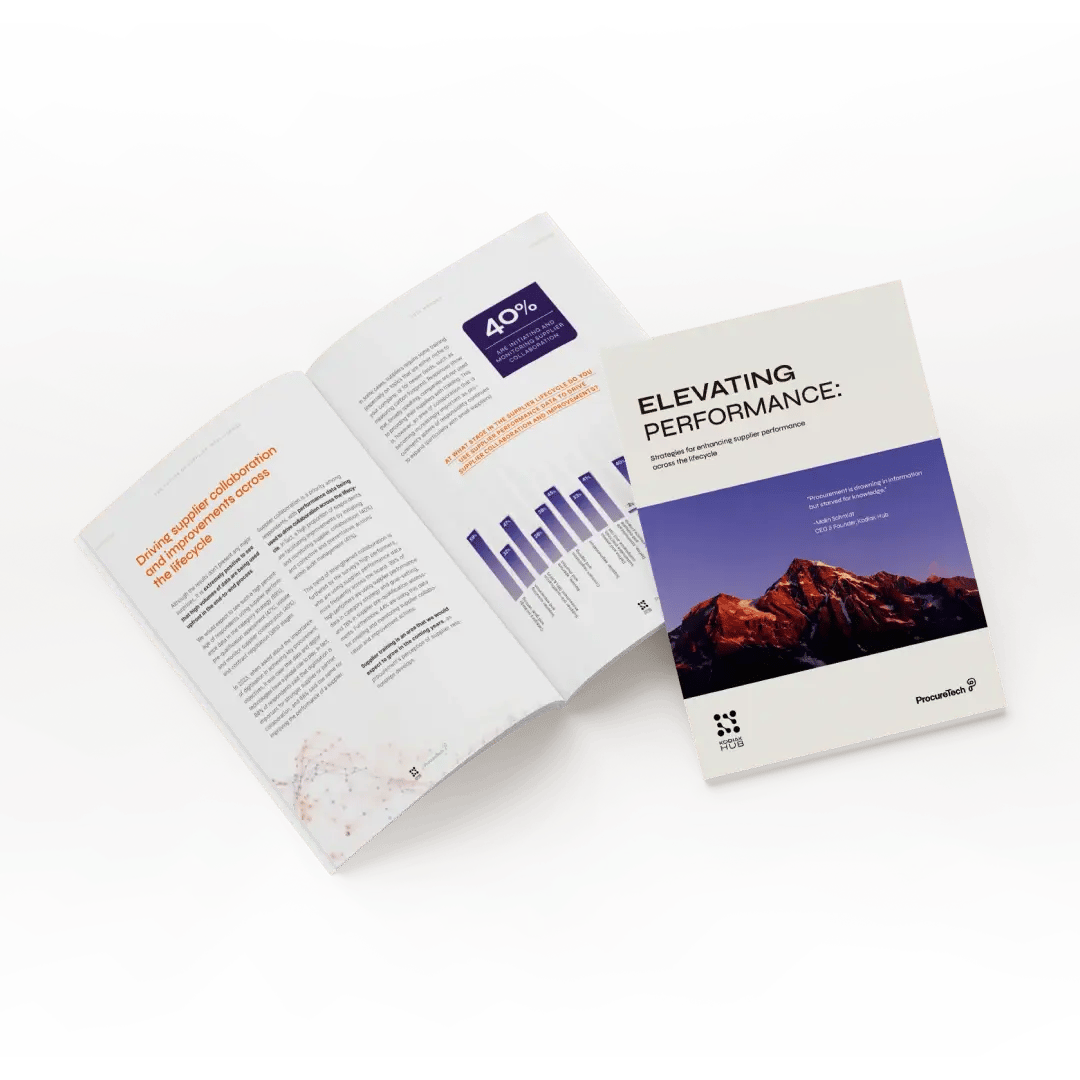
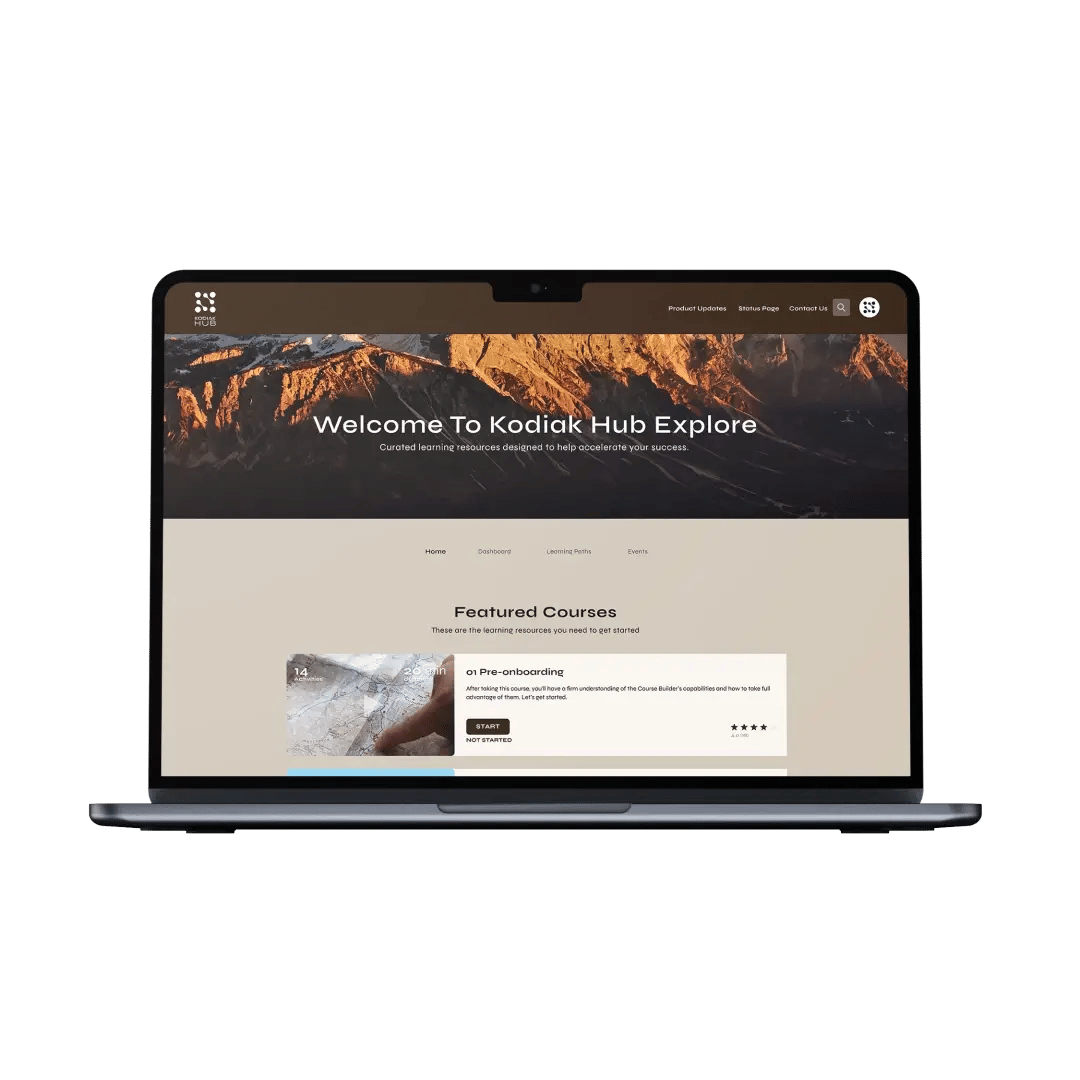
Kodiak Hub is an AI-powered supplier relationship management platform built for procurement, quality, sustainability, and supply chain teams.
It brings supplier information, onboarding, qualification, performance, risk, compliance, sustainability, product data, quality, audits, scorecards, collaboration, and corrective actions into one connected platform.
Kodiak Hub is not trying to replace Zycus feature for feature.
It is not a purchase-to-pay platform.
It is not an accounts payable system.
It is not a full sourcing suite.
Kodiak Hub is the dedicated supplier management layer that helps teams understand suppliers, improve performance, manage risk, and coordinate action across the supplier lifecycle.
Why Kodiak Hub stands out
Supplier management often becomes fragmented across the company’s technology stack.
The ERP contains supplier master data and spend. The source-to-pay platform contains sourcing and purchasing workflows. SharePoint contains certificates. A quality system contains claims and nonconformities. Third-party providers contain risk and ESG data. Performance reviews sit in spreadsheets. Follow-ups happen through email.
The business may have plenty of supplier data, but no complete view of the supplier relationship.
Kodiak Hub brings those supplier touchpoints together.
Teams can:
- Centralize supplier and product information
- Automate supplier onboarding and qualification
- Collect supplier documentation and self-assessments
- Build configurable supplier scorecards
- Evaluate supplier performance across multiple criteria
- Connect ERP data with internal feedback and third-party intelligence
- Track supplier quality, claims, defects, and nonconformities
- Plan and follow up on supplier audits
- Trigger corrective actions when performance, risk, compliance, or documentation changes
- Segment suppliers by category, risk, performance, geography, spend, product, or business unit
- Connect supplier insights to products, items, materials, and services
- Coordinate procurement, quality, sustainability, and supply chain around one supplier record
Kodiak Hub can integrate with ERP, P2P, sourcing, risk, ESG, quality, and analytics systems. This allows it to complement an existing procurement stack rather than force every process into one platform.
Where Kodiak Hub is a good fit
Kodiak Hub is particularly relevant for mid-market and enterprise organizations that:
- Manage hundreds or thousands of suppliers
- Work with direct materials, critical products, or business-critical service providers
- Have multiple sites, regions, business units, or procurement categories
- Need stronger collaboration between procurement and quality
- Have significant supplier compliance or sustainability requirements
- Run supplier audits or corrective action processes
- Need to maintain approved supplier lists
- Still rely on spreadsheets for supplier scorecards or performance reviews
- Want to connect supplier performance with product quality, continuity, compliance, and cost
- Already have systems for sourcing, purchasing, invoicing, or payments
Kodiak Hub is less suitable when the main requirement is invoice automation, purchase order processing, accounts payable, employee buying, sourcing events, or full source-to-pay replacement.
2. Coupa - best for broad spend management

Capterra rating - 4.0/5
G2 rating - 4.2/5
Coupa is commonly evaluated as a Zycus alternative by organizations looking for broad procurement and total spend management.
Its scope typically includes purchasing, source-to-contract, procure-to-pay, expenses, invoicing, supplier workflows, and spend visibility. Gartner currently places Coupa at the top of its Zycus alternatives list, while G2 also identifies it as one of the most frequently compared platforms.
Coupa may be a good fit when the organization wants to standardize procurement and spend processes across a large enterprise.
The key question is whether the business needs that broad suite coverage or a focused platform for supplier performance, quality, risk, audits, and continuous improvement.
3. SAP Ariba - best for SAP-led procurement

Capterra rating - 3.8/5
G2 rating - 4.1/5
SAP Ariba is a logical alternative for organizations already deeply invested in the SAP ecosystem.
It can support sourcing, contracts, procurement, invoicing, supplier lifecycle processes, supplier risk, and SAP Business Network connectivity.
SAP Ariba may be a strong choice when procurement transformation is part of a larger SAP strategy and the organization wants to keep sourcing, purchasing, supplier, and transaction processes closely aligned with SAP.
However, organizations that already use SAP may still need a dedicated SRM layer to connect supplier performance, quality, risk, documentation, audits, and improvement actions.
4. Ivalua - best for configurable source-to-pay

Capterra rating - 3.8/5
G2 rating - 4.3/5
Ivalua is frequently considered by organizations that want a flexible and configurable source-to-pay suite.
It can be relevant when the business needs broad procurement functionality but wants to configure processes, workflows, data structures, and supplier requirements around a complex operating model.
Ivalua may be a strong fit for enterprises with the resources and implementation appetite to shape a large suite around their processes.
If the requirement is narrower, such as improving supplier performance or quality without replacing the wider procurement stack, a dedicated SRM platform may offer a more focused route.
5. JAGGAER - best for complex procurement environments

Capterra rating - 4.1/5
G2 rating - 4.1/5
JAGGAER is commonly evaluated by large organizations with advanced sourcing, category management, supplier management, direct procurement, and procurement operations requirements.
It can be relevant for industries with complex procurement processes, extensive supplier bases, and mature procurement organizations.
For companies undertaking a broad procurement transformation, JAGGAER may belong on the shortlist.
For companies that mainly need supplier intelligence, performance management, quality collaboration, and risk visibility across existing systems, Kodiak Hub may provide a more focused alternative.
6. GEP SMART - best for enterprise procurement transformation

Capterra rating - 4.6/5
G2 rating - 4.3/5
GEP SMART is another broad source-to-pay and procurement transformation platform.
It is typically evaluated by large organizations seeking capabilities across sourcing, contracts, procurement, supplier management, spend analytics, and procurement operations.
GEP SMART may make sense when the company wants to consolidate multiple procurement processes through a wider enterprise program.
If the organization already has transactional systems and mainly wants to improve how suppliers are qualified, monitored, evaluated, audited, and developed, the broader suite may exceed the scope required.
7. Oracle Fusion Cloud Procurement - best for Oracle environments

Capterra rating - 4.2/5
G2 rating - 4.1/5
Oracle Fusion Cloud Procurement can be a logical Zycus alternative for organizations that use Oracle as a core enterprise platform.
It can support procurement, sourcing, supplier management, contracts, purchasing, and related finance workflows within the wider Oracle environment.
For Oracle-led organizations, this can simplify architecture and data governance.
But supplier management often requires information from outside the ERP, including quality systems, ESG providers, risk intelligence, audits, supplier responses, contracts, and stakeholder feedback. A dedicated SRM layer can help connect those signals without replacing Oracle.
8. Esker - best for AP and source-to-pay workflows
Capterra rating - 4.6/5
G2 rating - 4.2/5
Esker is another platform included in Gartner’s current Zycus alternative set.
It may be relevant for companies focused on source-to-pay, accounts payable, invoice automation, procurement operations, and financial workflow efficiency.
Esker belongs in the comparison when the business case is primarily transactional or finance-led.
If the company’s main concern is supplier performance, quality, audits, compliance, risk, or supplier development, an AP or source-to-pay platform may not provide the depth required across the relationship.
9. Procurify - best for purchasing and spend control

Procurify is often evaluated by organizations looking to improve purchase requests, approvals, purchase orders, budgets, and spend visibility.
It can be particularly relevant for growing companies that want to move away from email-based purchasing and introduce clearer control without implementing a larger enterprise suite.
Procurify may be the better choice when purchasing workflows and spend control are the main priorities.
Kodiak Hub is the more relevant comparison when the business already has purchasing covered and needs to improve supplier information, qualification, performance, quality, risk, audits, and corrective actions.

Zycus vs Kodiak Hub: what is the difference?
Zycus is a broad source-to-pay procurement suite.
Kodiak Hub is a dedicated supplier relationship management platform.
That distinction matters.
Zycus is designed to connect multiple procurement activities from intake and sourcing through contracting, procurement, invoicing, and payment.
Kodiak Hub is designed to help companies understand and improve supplier relationships across functions.
Zycus may hold supplier records as part of a wider procurement process.
Kodiak Hub builds a connected supplier record around performance, risk, compliance, sustainability, documents, products, quality, audits, internal feedback, and improvement actions.
The choice therefore depends less on which platform has the longest feature list and more on which business process needs to improve.
Zycus alternatives compared
Each alternative below addresses a different procurement technology need. The “best fit” column describes the primary buying case rather than every feature the platform may offer.
| Solution | Best fit | Main strength | Less ideal when |
|---|---|---|---|
| Zycus | Integrated source-to-pay transformation | Intake, sourcing, contracts, procurement, supplier processes, AP, and AI-led orchestration | You only need a focused SRM layer |
| Kodiak Hub | Supplier relationship management | Supplier information, qualification, performance, quality, risk, audits, compliance, products, and corrective actions | You need full P2P, AP, invoicing, or sourcing replacement |
| Coupa | Broad spend management | Procurement, spend control, P2P, expenses, invoicing, and enterprise visibility | The main gap is supplier quality, audits, or development |
| SAP Ariba | SAP-led enterprise procurement | Source-to-pay, supplier network connectivity, and SAP ecosystem alignment | You want a focused SRM platform outside a larger SAP program |
| Ivalua | Configurable source-to-pay | Flexible enterprise procurement processes and data models | You do not need a broad suite or extensive configuration |
| JAGGAER | Complex procurement environments | Advanced sourcing, direct procurement, supplier management, and category processes | You want a simpler SRM-first layer |
| GEP SMART | Enterprise procurement transformation | Broad source-to-pay, analytics, sourcing, and procurement operations | You mainly need supplier lifecycle intelligence |
| Oracle Fusion Cloud Procurement | Oracle-led procurement | Procurement and supplier workflows connected to Oracle finance and ERP | Supplier processes span multiple non-Oracle systems |
| Esker | AP and source-to-pay efficiency | Invoice automation, AP, procurement, and financial workflows | You need deep supplier performance, quality, or audit management |
| Procurify | Purchasing and spend control | Requests, approvals, POs, budgets, and purchasing visibility | Your central problem is strategic supplier management |
When Zycus may be the right choice
Zycus may be the better fit if:
- You want to replace or consolidate multiple procurement applications
- You need a broad source-to-pay suite
- Your requirements span intake, sourcing, contracts, purchasing, invoicing, and payment
- You want procurement activities and data to flow through one integrated architecture
- AI-led procurement orchestration is a central part of the business case
- You have the resources to implement and govern a broader enterprise suite
- Your transformation is designed around standardizing end-to-end procurement, not only supplier management
In that situation, Kodiak Hub does not necessarily need to replace Zycus.
The platforms can serve different purposes. Zycus can manage source-to-pay processes, while Kodiak Hub provides a focused supplier intelligence layer for performance, quality, risk, compliance, audits, product relationships, and continuous improvement.
When Kodiak Hub is the better Zycus alternative
Kodiak Hub may be the better fit if your team is asking questions like:
- Which suppliers are underperforming?
- Which suppliers create the greatest quality or continuity risk?
- Which suppliers are missing critical documents or certifications?
- Which suppliers have unresolved audit findings?
- Which suppliers need corrective action or development plans?
- Which suppliers affect our most important products, items, materials, or services?
- Which suppliers are failing compliance or sustainability expectations?
- Which supplier relationships are creating measurable business value?
- Which suppliers should we develop, consolidate, monitor, or exit?
- Which supplier data can procurement, quality, and supply chain actually trust?
These questions are difficult to answer when supplier information is fragmented across source-to-pay systems, ERP, Excel, SharePoint, contracts, quality tools, risk platforms, ESG systems, PDFs, email, and BI dashboards.
Kodiak Hub connects those signals in one supplier view.
Teams can see not only that a supplier has a low score, but why the score is low, which part of the business is affected, who owns the next step, and what action needs to happen.
The outcome is not just better supplier data.
It is better supplier decisions.
A better way to think about Zycus alternatives
The best Zycus alternative depends on what you are actually trying to fix.
If you need to replace an entire procurement suite, compare source-to-pay platforms.
If you need stronger purchasing, approvals, or spend control, compare procurement automation tools.
If you need invoice processing or accounts payable automation, compare AP platforms.
If you need contract authoring and obligation management, compare contract lifecycle management systems.
But if you need supplier information, onboarding, qualification, performance, risk, quality, compliance, audits, scorecards, collaboration, product-level insight, and continuous improvement in one place, compare dedicated SRM platforms.
A Zycus alternative does not have to reproduce every Zycus module.
It should solve the problem your organization is actually trying to address.
That is where Kodiak Hub should be on the shortlist.
Questions to ask before choosing a Zycus alternative
Before choosing an alternative to Zycus, ask:
1. Are we replacing source-to-pay or filling a supplier management gap?
Many teams do not need to replace everything.
They already have systems for ERP, sourcing, purchasing, invoicing, or payments. Their real gap is managing supplier relationships consistently after suppliers enter the business.
Define whether the project is a suite replacement or a focused supplier management initiative before comparing products.
2. Which system should own each process?
Clarify where supplier master data, sourcing events, contracts, purchase orders, invoices, performance evaluations, risk indicators, quality issues, audits, and corrective actions should live.
Trying to force every activity into one platform can create as many problems as it solves.
A better architecture gives each process a clear system of record and connects the data required for decisions.
3. Will internal stakeholders and suppliers actually use it?
Technology only creates value when people contribute information and act on the outputs.
Consider how easily procurement, quality, sustainability, finance, legal, supply chain, and business stakeholders can participate.
Also evaluate the supplier experience. Complicated portals, unclear requests, and unnecessary questionnaires can reduce response rates and damage data quality.
4. Can the platform connect with our existing technology?
A supplier management platform should work with ERP, source-to-pay, P2P, quality, risk, ESG, contract, and analytics systems.
The objective is not to create another data silo.
It is to connect supplier information from multiple sources and make it useful across the organization.
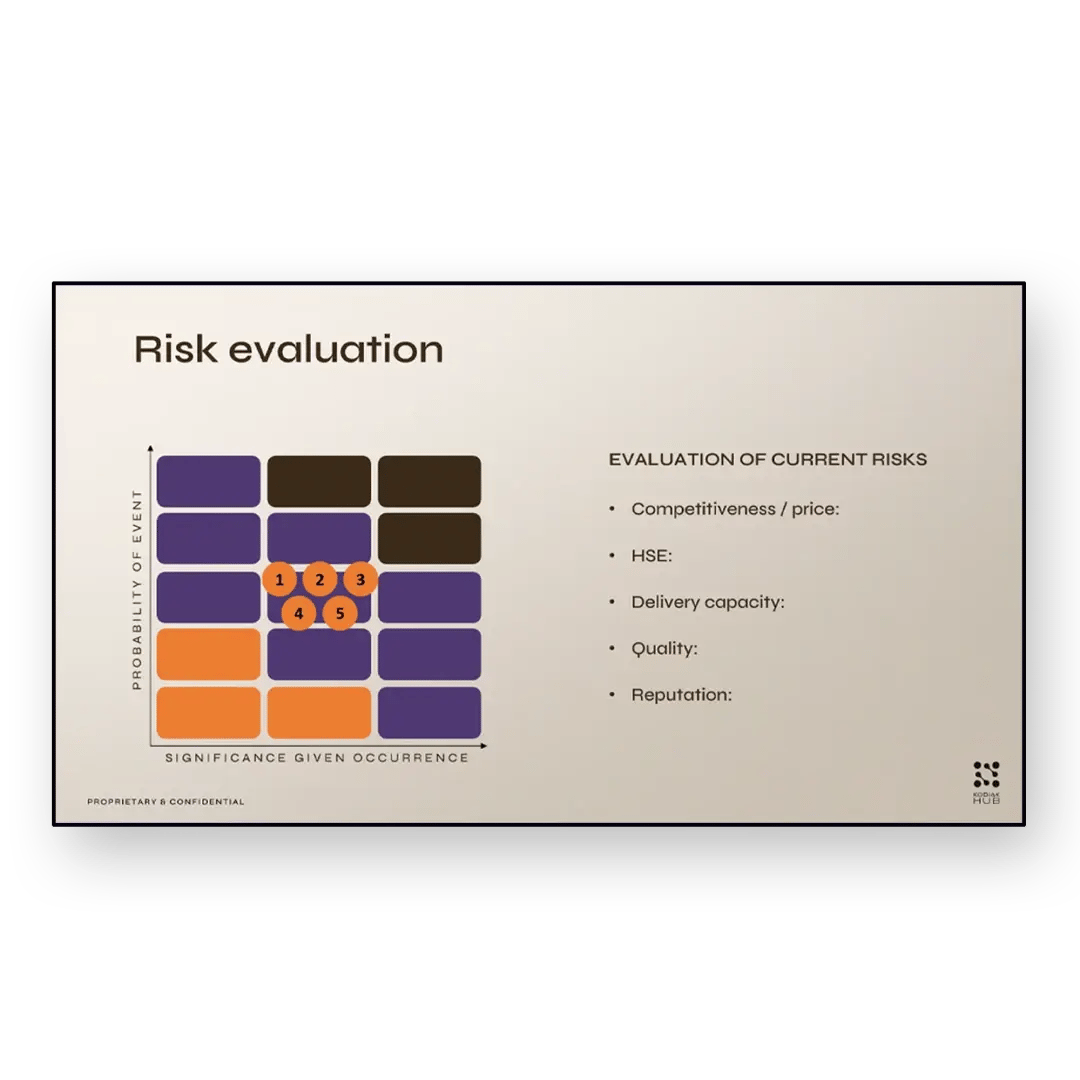
5. Can it connect performance, risk, quality, compliance, and cost?
Supplier information becomes more valuable when teams can see the relationship between different signals.
A supplier may have strong commercial performance but recurring quality issues. Another may meet delivery targets but create compliance risk. A third may perform well overall but support a product with no alternative source.
The platform should help teams understand these relationships rather than present isolated scores.
6. Can supplier insights trigger action?
Dashboards are useful, but visibility alone does not improve a supplier.
Look for the ability to convert poor KPI results, expired documents, failed assessments, audit findings, risk changes, defects, and nonconformities into structured workflows.
Those workflows should include clear owners, deadlines, supplier participation, approvals, supporting evidence, and an audit trail.
7. Can we connect suppliers to products and business impact?
Supplier risk is more meaningful when teams can see which products, materials, sites, customers, or business units are exposed.
This is especially important for companies in manufacturing, food and beverage, retail, energy, infrastructure, and process industries.
A supplier platform should help the business understand not only which supplier has a problem, but what that problem could affect.
8. Can we start with a focused scope and expand?
A supplier management transformation does not need to begin with every supplier, region, module, and workflow.
Teams can start with supplier information, onboarding, documentation, performance, or risk.
They can then expand into quality, audits, sustainability, product data, collaboration, and supplier development as adoption and process maturity grow.
Final verdict: the best Zycus alternative for SRM
Zycus is a credible option for organizations looking for an integrated source-to-pay platform with intake, sourcing, contracting, procurement, supplier, AP, and AI-led capabilities.
If that is the transformation you are planning, Zycus should remain on the shortlist alongside Coupa, SAP Ariba, Ivalua, JAGGAER, GEP SMART, Oracle, and other source-to-pay providers.
But if your main objective is to improve supplier relationship management, the comparison changes.
Kodiak Hub gives procurement, quality, sustainability, and supply chain teams a connected way to manage supplier information, onboarding, qualification, performance, quality, risk, compliance, audits, scorecards, products, collaboration, and corrective actions.
It can work alongside existing ERP, sourcing, P2P, and finance systems rather than replacing them.
Because the goal is not simply to move a supplier through source-to-pay.
The goal is to know which supplier relationships are helping the business perform, which ones need attention, and what to do next.