Vendor performance, clearly scored
Vendor Scorecard Software
Build connected vendor scorecards across quality, delivery, cost, risk, compliance, and collaboration - then turn every rating into action.
Compare vendors clearly. improve performance continuously.
Book a Demo to find out more.
World-class procurement teams using Kodiak Hub

One Vendor Scorecard. Shared Standards. Better Decisions.
Give Procurement, Purchasing, Sourcing, Supply Chain, Supplier Quality, and Category Management teams a consistent way to evaluate vendors across categories, business units, and regions.
Bring everyone around the same KPIs and performance evidence so teams can compare results, identify gaps earlier, and make better sourcing and improvement decisions.
Evaluate. Compare. Improve.
Compare Vendors Against Targets That Matter
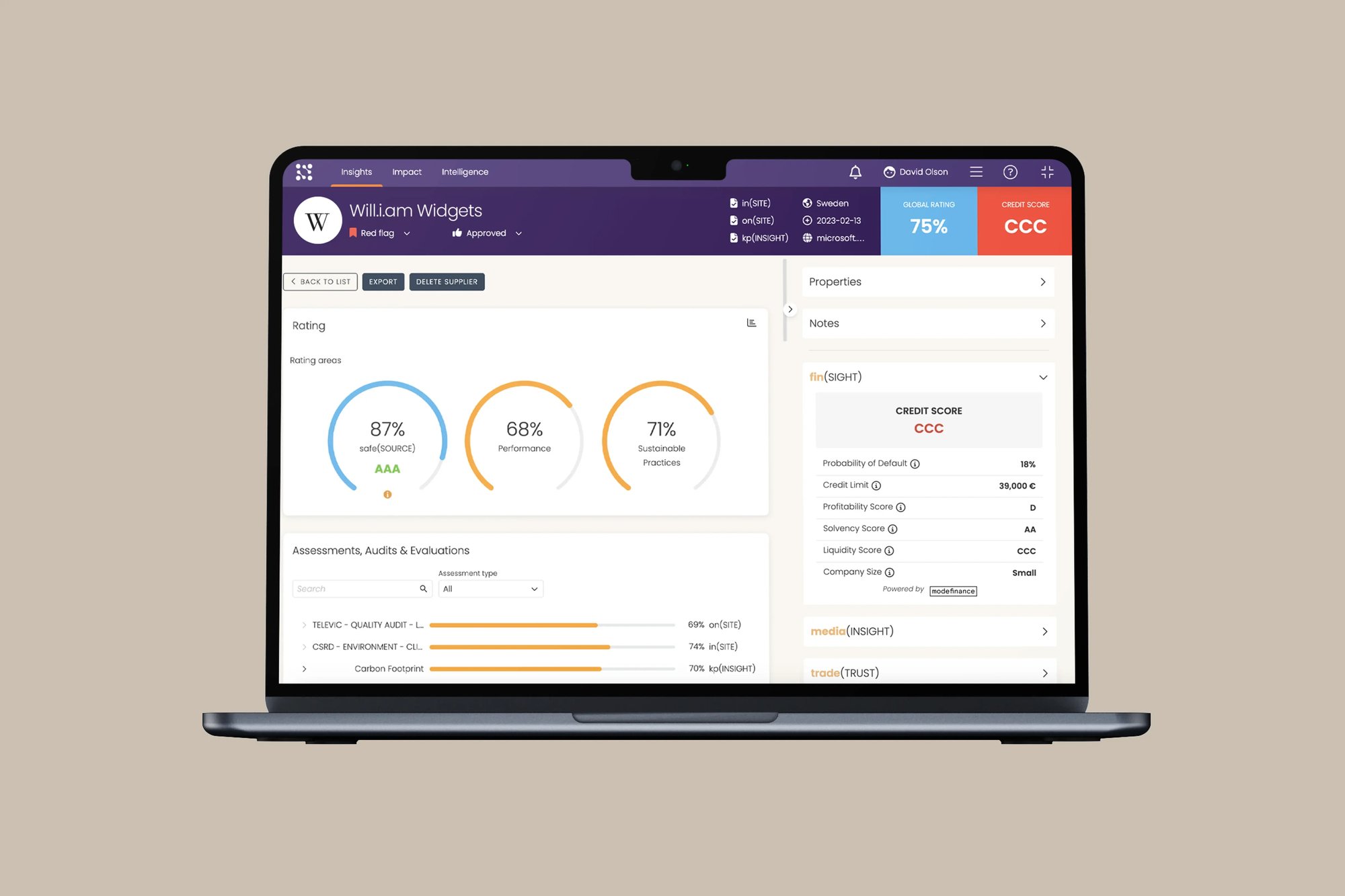
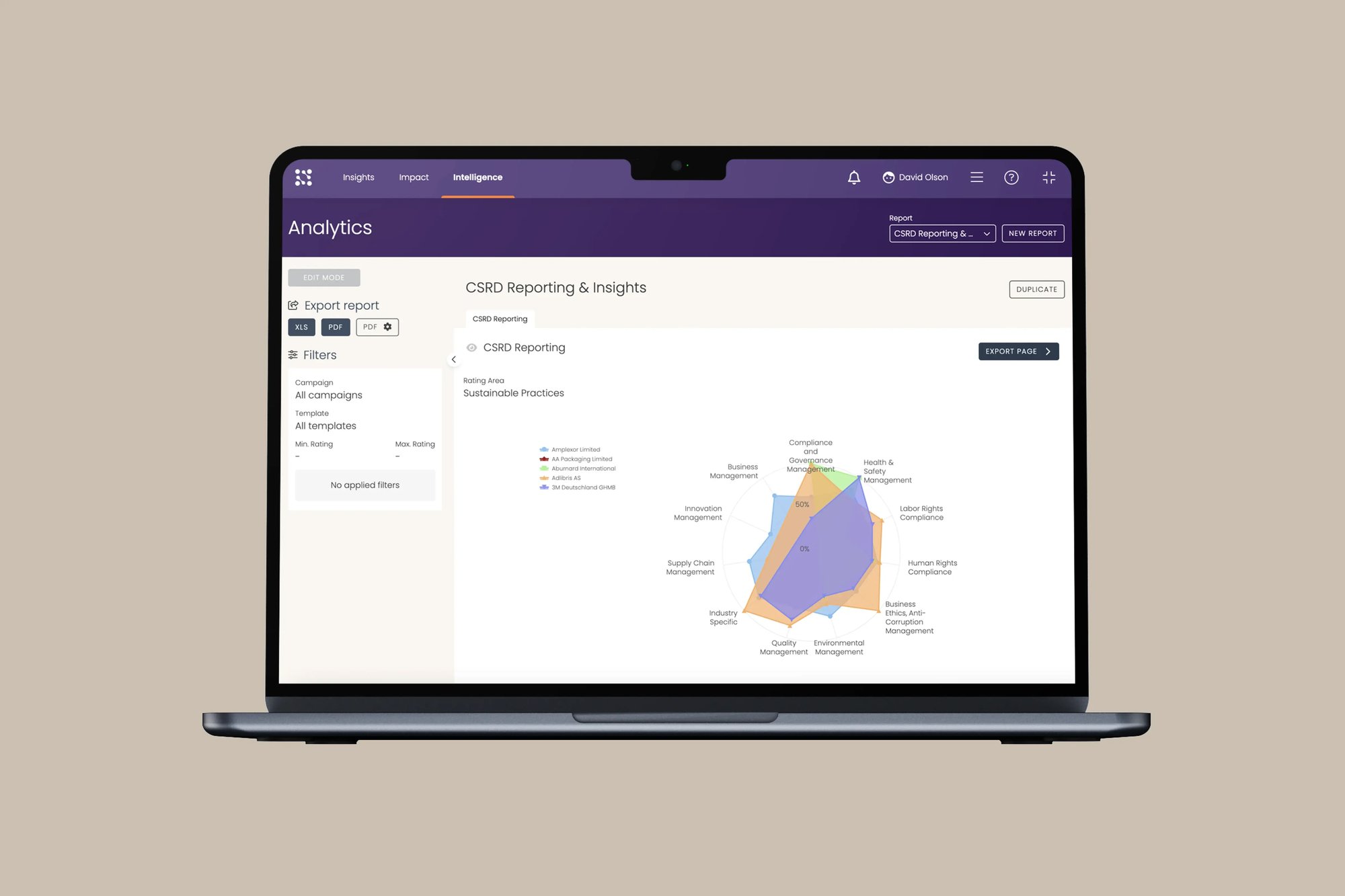
Benchmark each vendor against agreed targets, previous performance, and comparable vendors within the same category or segment.
Consistent rating models help teams identify leading vendors, uncover performance gaps, and support sourcing, allocation, renewal, and vendor-development decisions with objective evidence.
See the Complete Story Behind Every Vendor Rating
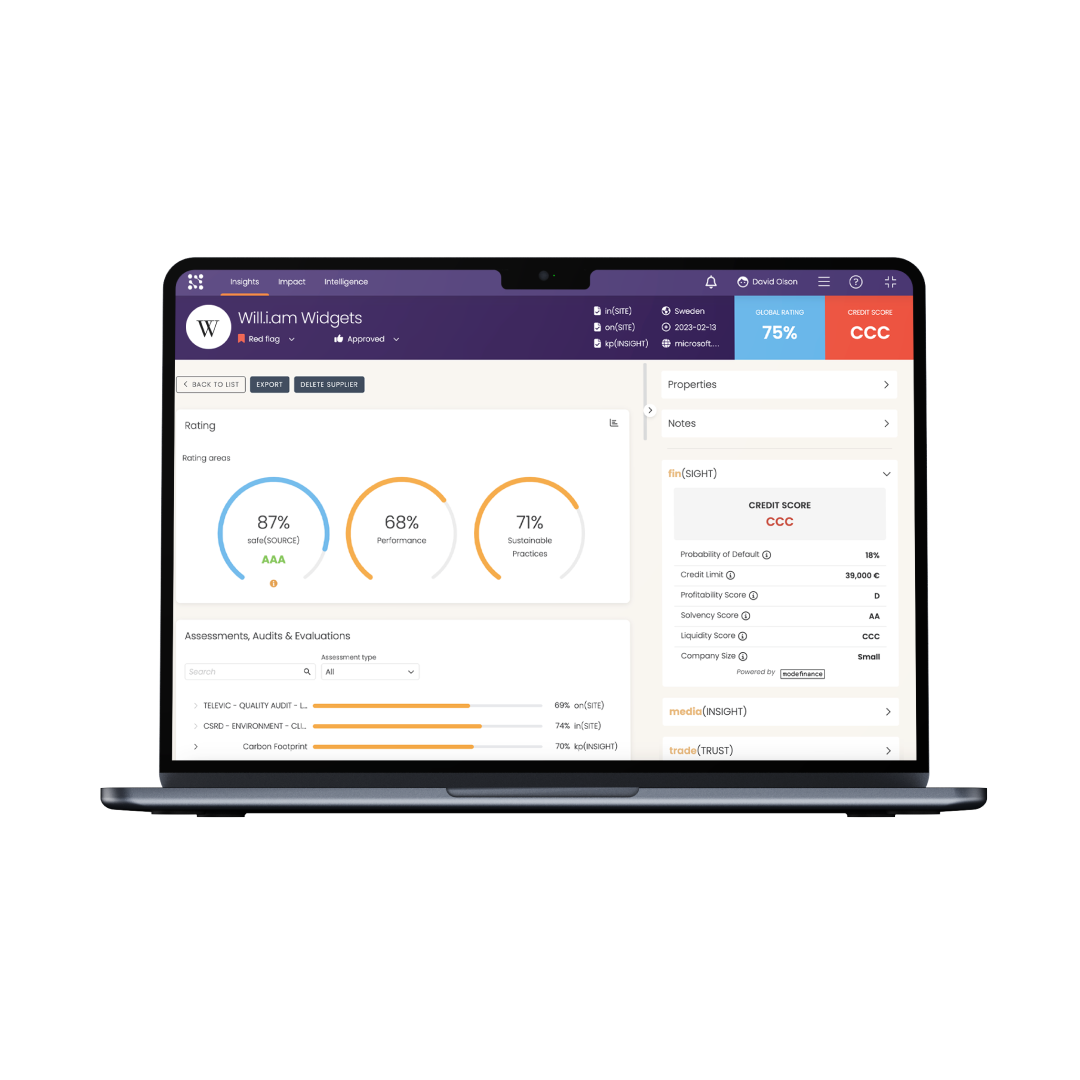
Bring vendor information, stakeholder evaluations, ERP and purchasing measures, contracts, SLAs, certificates, audit results, spend, risk signals, and improvement actions into one connected vendor record.
Each rating is supported by the information behind it, giving your team the context to understand performance, investigate changes, and make more confident sourcing decisions.
Spot Performance Trends and Exceptions at a Glance
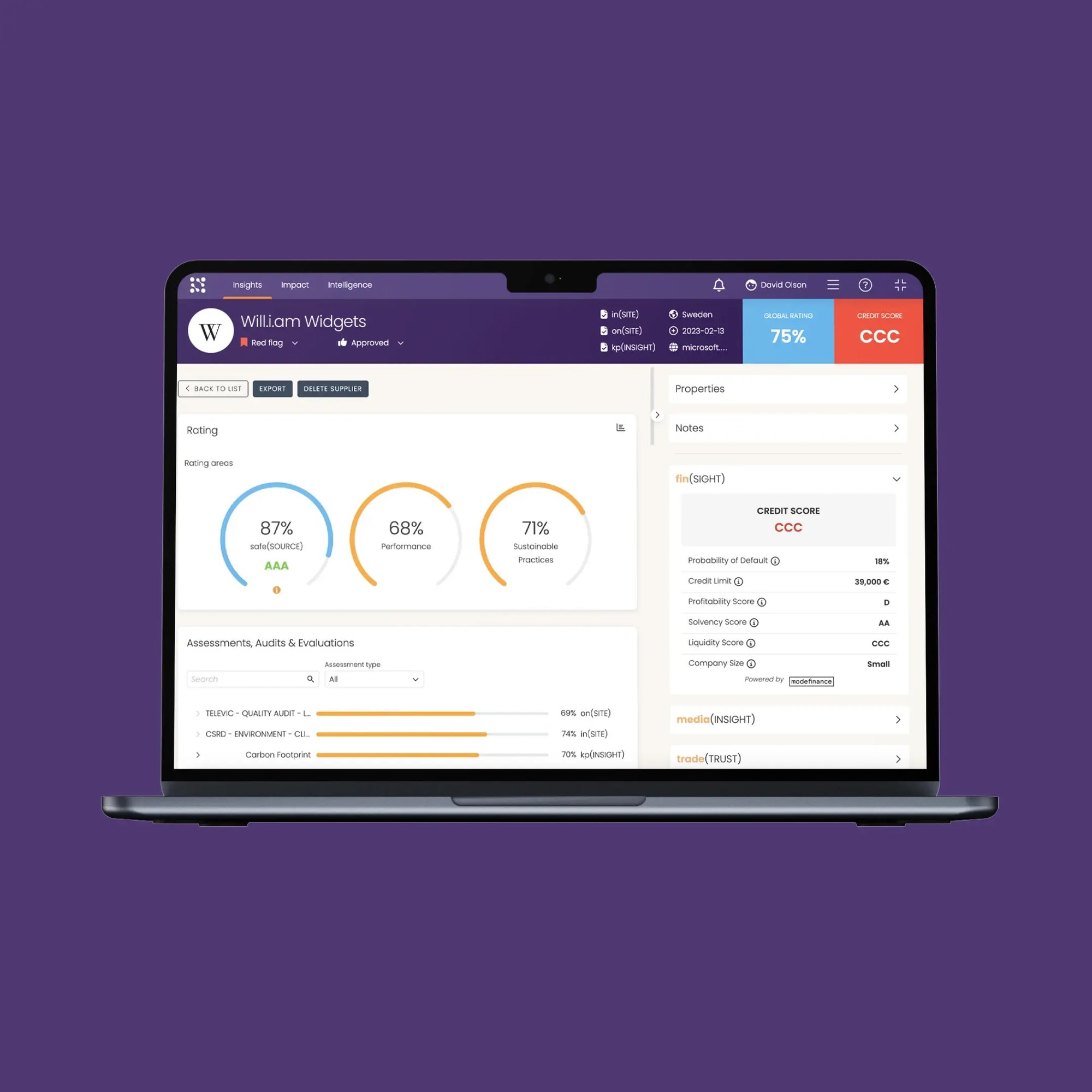
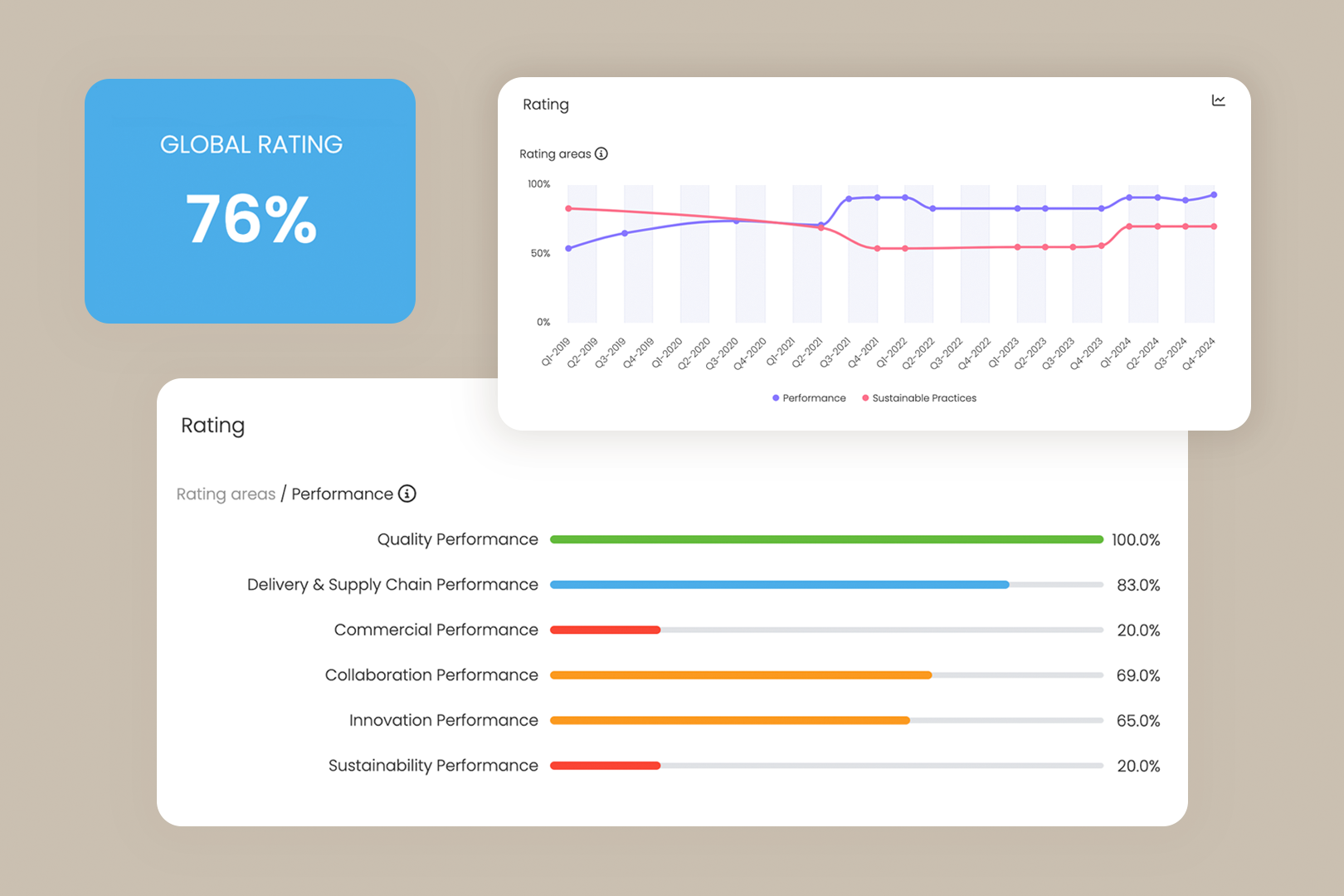
Use a clear vendor scorecard dashboard to monitor quality, delivery, cost, service, collaboration, sustainability, risk, and compliance in one view.
Track results against targets, identify vendors moving off course, and explore the supporting information behind each rating before a small issue becomes a larger operational or commercial problem.
Give Every Team a Consistent Way to Score Vendors
Replace subjective reviews and disconnected spreadsheets with shared criteria, weighted KPIs, and structured stakeholder feedback.
Give Procurement, Supplier Quality, Operations, Finance, and category teams a repeatable vendor evaluation process across business units and review cycles—reducing subjectivity and making comparisons more credible.
Compare Vendors Against Targets That Matter
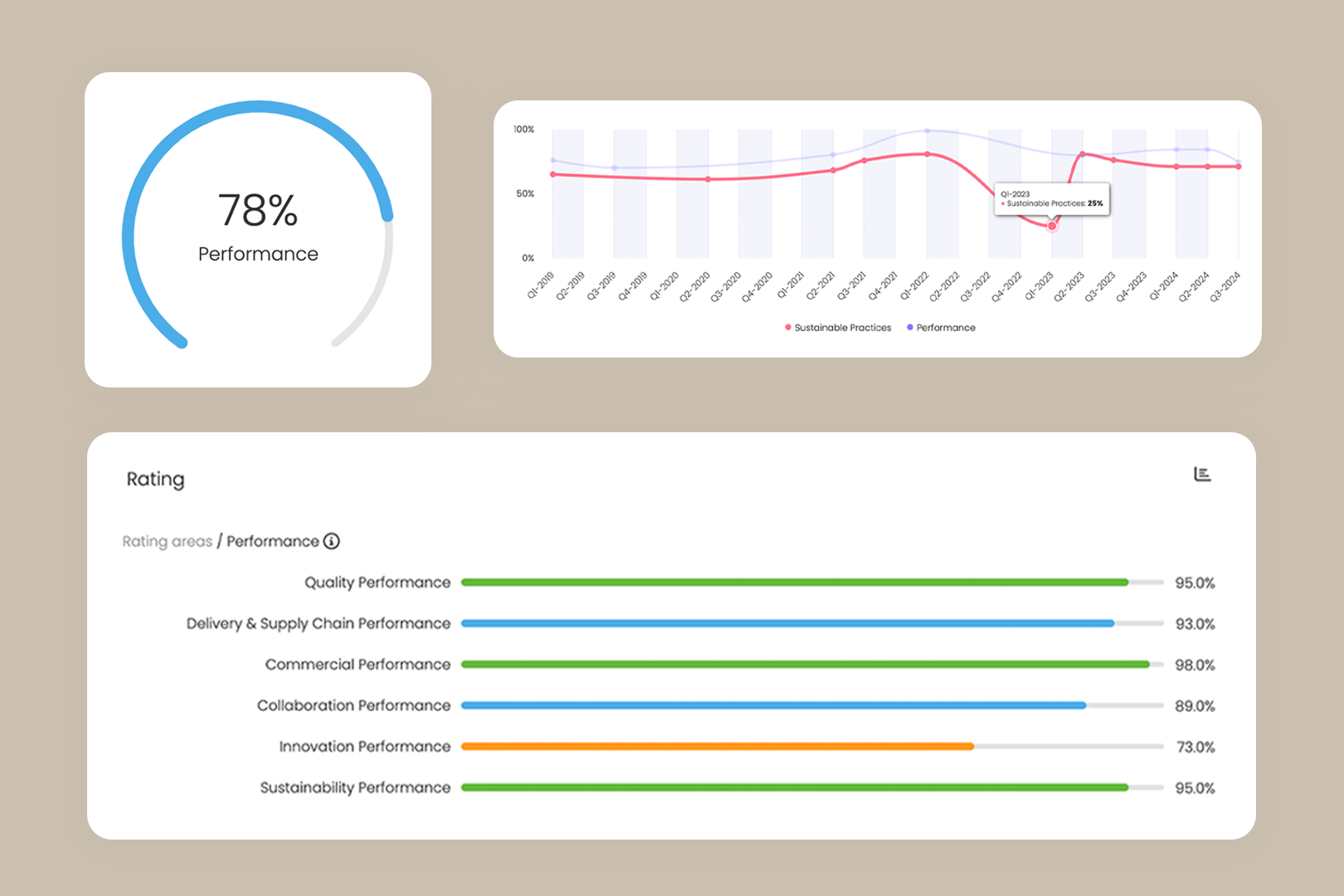
Benchmark each vendor against agreed targets, previous performance, and comparable vendors within the same category or segment.
Consistent rating models help teams identify leading vendors, uncover performance gaps, and support sourcing, allocation, renewal, and vendor-development decisions with objective evidence.
Measure the KPIs That Define Vendor Value
Track the measures that matter to each vendor relationship—from defect rates, on-time delivery, lead times, and SLA attainment to cost performance, responsiveness, collaboration, innovation, and sustainability.
Bring operational, commercial, and stakeholder data together so vendor reviews reflect the whole relationship rather than one isolated metric.
Evaluate Performance Without Losing Sight of Exposure
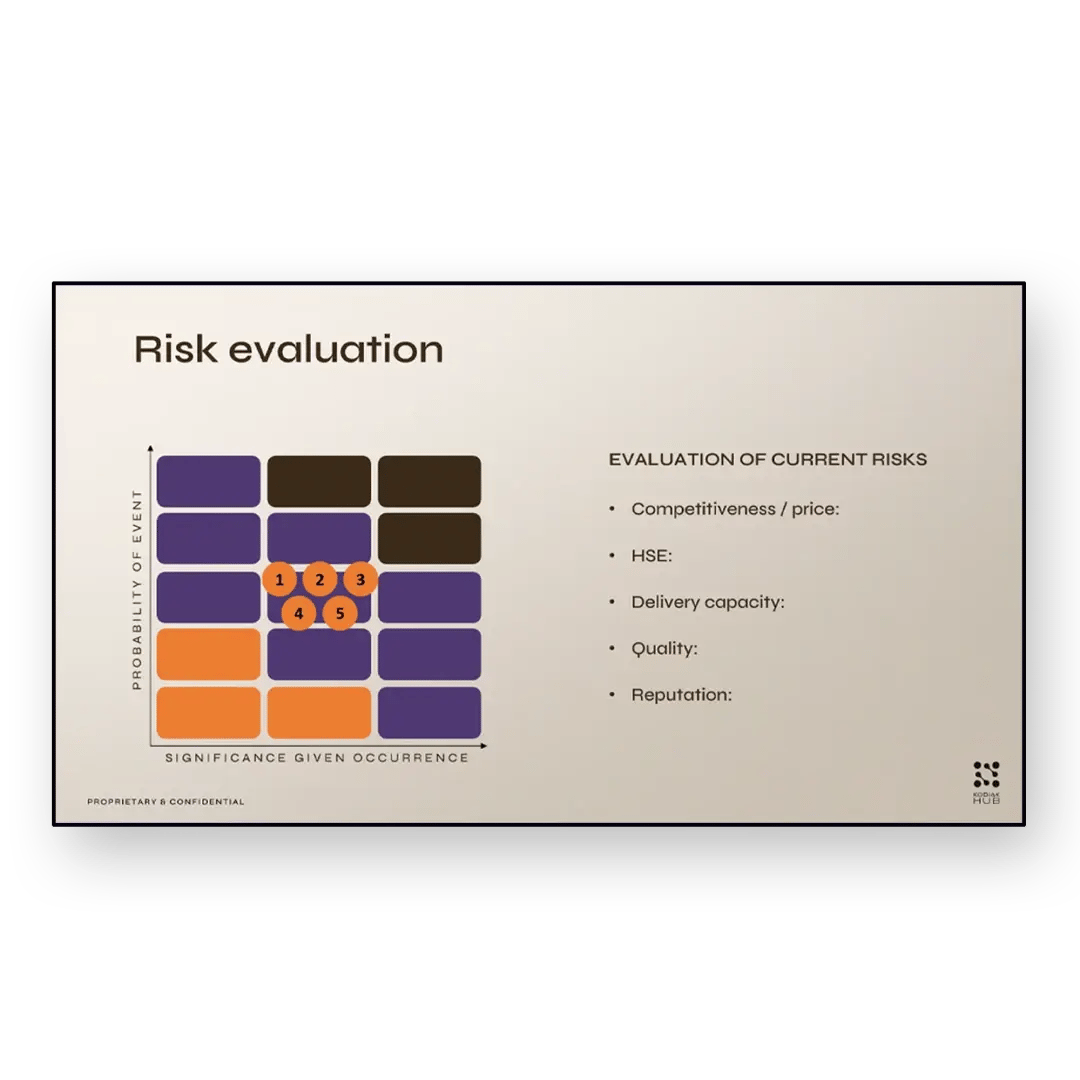
A vendor can meet operational targets while financial, geographic, compliance, or reputational exposure grows in the background.
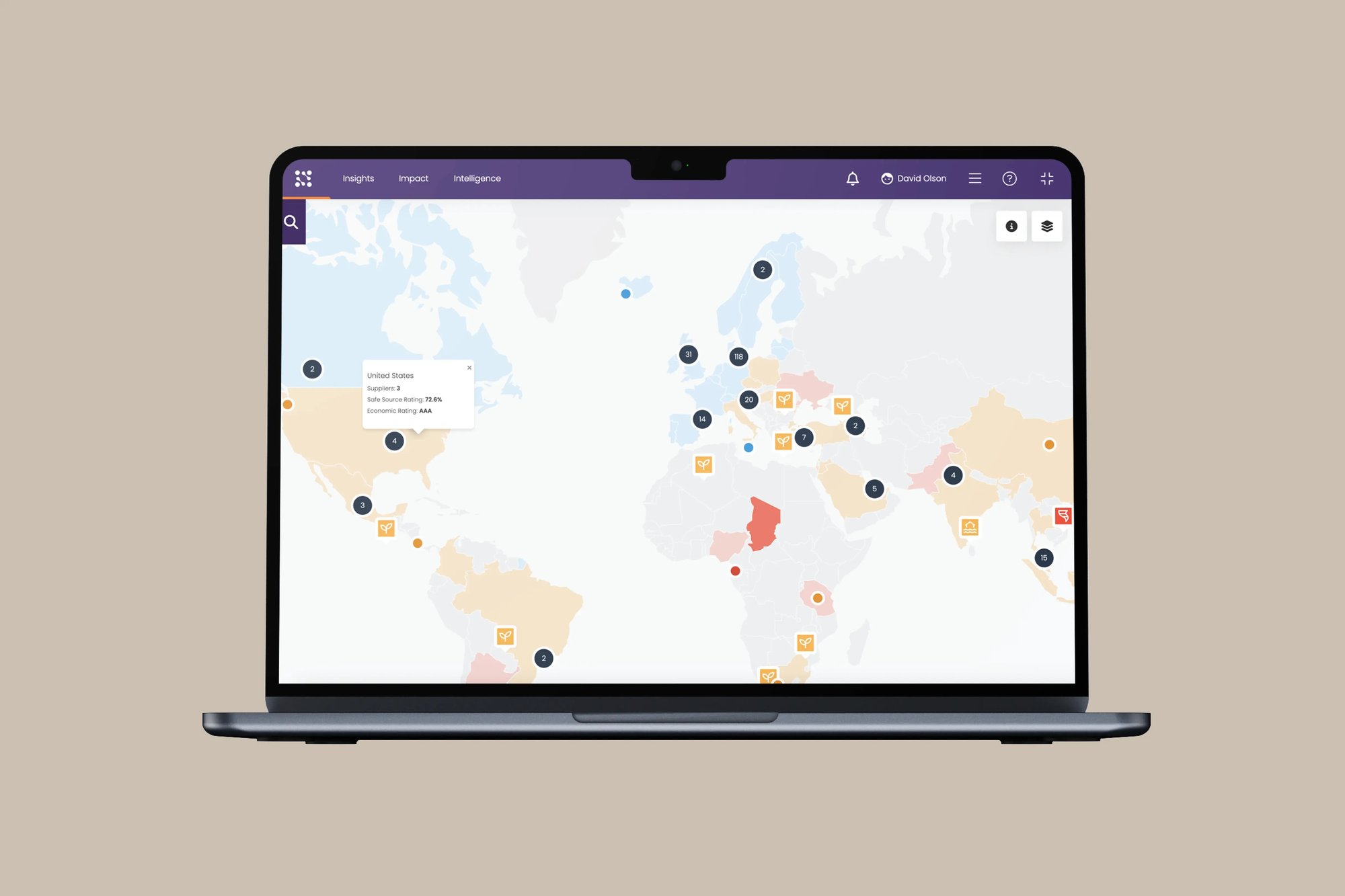
Bring scorecard results together with assessments, certificates, audit findings, financial health, country risk, sanctions, adverse media, and other third-party intelligence for a more complete view of vendor health.
Turn Underperformance Into Owned, Trackable Action
Move directly from a missed target or low rating to a structured improvement plan.
Assign owners, agree deadlines, involve vendors and internal stakeholders, monitor progress, and keep communication and evidence connected to the vendor record—so actions remain visible through completion.
Set the Right Expectations for Every Vendor
Create weighted KPIs, thresholds, targets, and rating schemes based on vendor type, category, criticality, contract requirements, and strategic importance.
Apply different scorecards to strategic vendors, service providers, contract manufacturers, indirect vendors, and lower-risk transactional relationships while preserving the history needed to measure progress.
“Our management team feels we are very secure and sure of who we’re buying/sourcing from thanks to Kodiak Hub. Increased supply chain visibility has created a sense of calm, which is very much appreciated.”
Sunny Yang
Group Purchasing Director
HL Display
From Ratings to Results
Make Vendor Scorecards Part of Everyday Procurement

Vendor scorecards create value when they influence decisions - not when they sit in a quarterly presentation.
Kodiak Hub gives teams a repeatable way to evaluate vendors, compare results, agree priorities, and track improvements in one connected platform.
- Reduce the time spent gathering, validating, and reconciling vendor performance data.
- Compare vendors using consistent KPIs, thresholds, and rating criteria.
- Bring quality, delivery, cost, service, risk, and compliance into the same conversation.
- Support sourcing, negotiation, allocation, renewal, and vendor-development decisions with evidence.
- Track whether corrective actions are producing measurable improvements.
Bye Excel.
Hello Smart Scorecards!
See how Kodiak Hub's SRM suite elevates your vendor scorecards!
.webp?width=2000&height=1333&name=Accolades%20%26%20Reviews%20(6).webp)
Vendor Scorecard Software FAQ
Vendor scorecard software is a digital system for measuring, comparing, and improving vendor performance using defined KPIs, targets, and rating criteria.
It brings together performance data from ERP and procurement systems, stakeholder evaluations, vendor submissions, audits, documents, and third-party sources. Teams can then identify trends, compare vendors, investigate performance gaps, and support sourcing decisions with consistent evidence.
A vendor scorecard should measure the outcomes that matter to the specific vendor relationship.
Common areas include:
- Product or service quality
- On-time delivery
- Lead times
- SLA performance
- Cost and commercial performance
- Responsiveness
- Risk and business continuity
- Regulatory and policy compliance
- Sustainability
- Collaboration and innovation
- Corrective action completion
Each area should be weighted according to the vendor’s category, criticality, contract, and strategic importance.
A vendor scorecard dashboard gives procurement teams a visual view of vendor performance across KPIs, targets, and review periods.
It helps teams identify vendors that are performing well, spot declining results, see which targets are being missed, and investigate the information behind each score. This reduces the time spent assembling reports and makes performance conversations more objective.
Yes. Vendor scorecard software can help teams compare vendors against agreed targets, previous performance, and other relevant vendors within the same category or segment.
Consistent KPIs and rating criteria create a fairer basis for identifying high performers, prioritizing improvement work, and supporting sourcing, allocation, renewal, and negotiation decisions.
Vendor scorecard software focuses on the measurement and presentation of vendor performance through KPIs, ratings, targets, and evaluations.
Vendor performance management software covers the broader process of collecting performance data, conducting evaluations, collaborating with vendors, managing corrective actions, monitoring progress, and supporting continuous improvement.
Kodiak Hub connects the scorecard and the wider performance-management process in one platform.
Yes. Vendor scorecards should reflect the requirements of the relationship being evaluated.
Kodiak Hub supports configurable KPIs, targets, thresholds, and rating schemes so teams can evaluate a service provider differently from a manufacturer, logistics vendor, technology provider, contract manufacturer, or transactional vendor.
Kodiak Hub supports integration with ERP, source-to-pay, procure-to-pay, and third-party data sources.
This allows operational and purchasing data to be combined with stakeholder evaluations, vendor information, documentation, risk intelligence, assessments, and improvement actions in one connected vendor view.
The terms are often used interchangeably. “Vendor” is frequently used in US procurement and in indirect or service-purchasing environments, while “supplier” is common in global and direct-material procurement.
Both describe software used to measure third-party performance, identify risks and performance gaps, and support improvement decisions.
For teams using supplier terminology, explore Kodiak Hub’s supplier scorecard software.
Make decisions.
Not spreadsheets.
See how Kodiak Hub's SRM suite elevates your vendor scorecards!