
.png?width=750&height=750&name=Thought%20Leadership%20(3).png)


.png?width=750&height=750&name=Webinar%20Linkedin%201x1%20(3).png)

.png?width=1200&height=1200&name=Webinar%20Linkedin%201x1%20(6).png)

.png?width=750&height=750&name=Webinar%20Linkedin%201x1%20(11).png)
.png?width=2000&name=3x2%20Images%20(4).png)

.png?width=1200&height=1200&name=Webinar%20Linkedin%201x1%20(10).png)
How SRM Software Complements Your ERP
Your ERP is built to move money and materials. It is the transactional engine that keeps POs, receipts, invoices, and payments in sync. But when it comes to supplier onboarding, due diligence, risk, performance, and audits, most teams still fall back on spreadsheets, inboxes, and manual workarounds.
In this webinar, we will show how a dedicated SRM (Supplier Relationship Management) platform complements your ERP, so the suppliers you transact with are qualified, compliant, and continuously improving. You will see what belongs in ERP, what belongs in SRM, and how the two should work together in practice.
We'll cover:
- ERP vs SRM: what belongs where
Clear roles for ERP as the system of record for transactions and financial control, and SRM as the layer for onboarding, risk, performance, and collaboration.
- What SRM adds on top of ERP
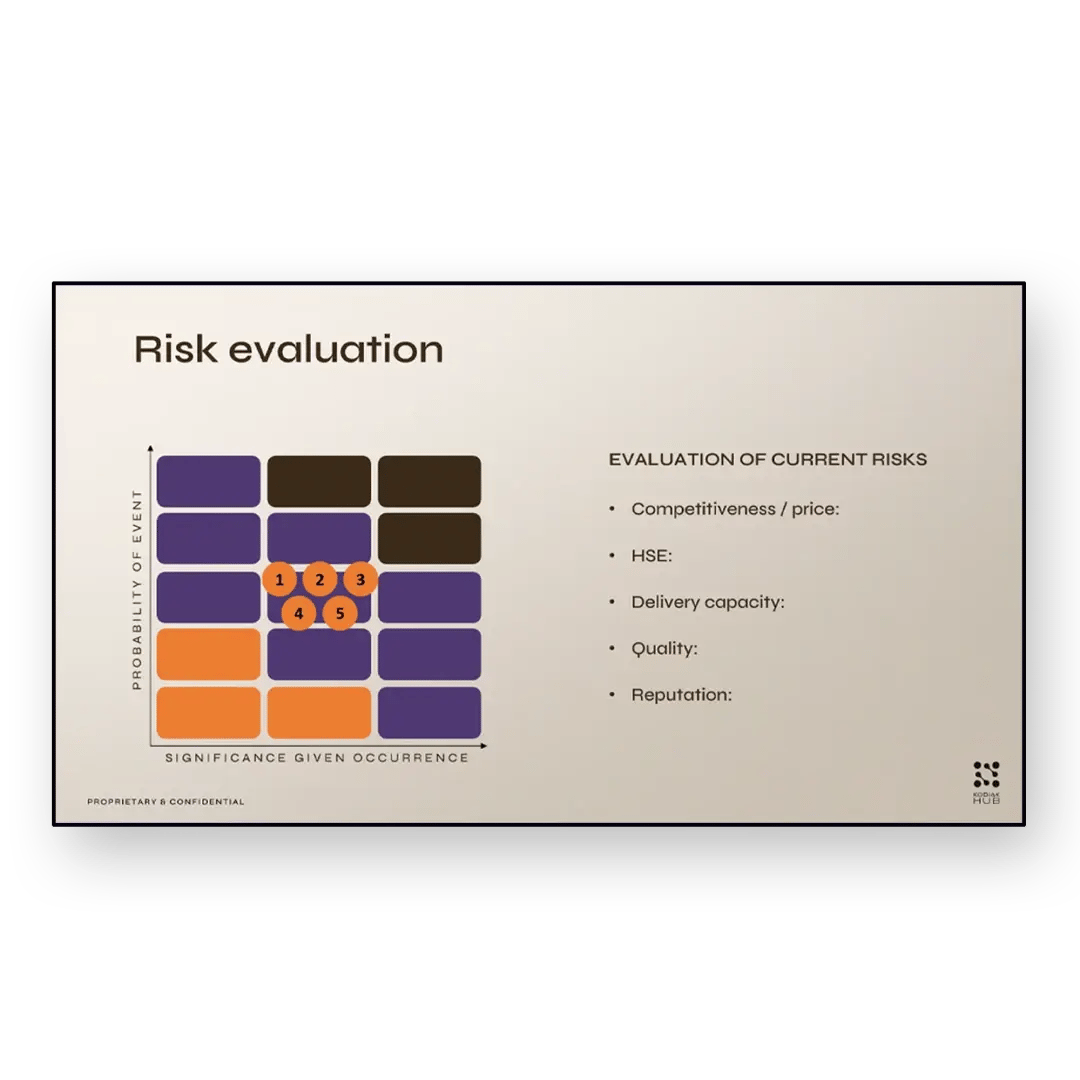
Risk tiered onboarding, automated due diligence, supplier scorecards, audits, CAPA, and supplier portals that remove email ping pong and make award and renewal decisions evidence based.
- How ERP and SRM integrate in real life
Master data sync, process handoffs from onboarding to purchasing, and how SRM can automatically put vendors on hold in ERP when certificates lapse or risk spikes.
- Industry examples you can copy
Concrete ERP plus SRM scenarios from manufacturing, food and beverage, energy and utilities, and retail that show how issues are surfaced in ERP and solved in SRM.
- When ERP alone is enough and when to add SRM
A simple set of criteria around category risk, supplier complexity, and audit requirements to decide whether you can stay ERP only or should layer in SRM.
You will walk away with a practical model for ERP vs SRM, a checklist for your own architecture, and concrete ideas to shorten onboarding, cut risk, and improve supplier performance without ripping out your existing ERP.
See ya in the session 👋🏼
Ready to Learn More?
Revolutionize the way you and your suppliers do business - empowering performance, predictability, and purpose throughout your entire supply chain.