
.png?width=750&height=750&name=Thought%20Leadership%20(3).png)


.png?width=750&height=750&name=Webinar%20Linkedin%201x1%20(3).png)



.png?width=1200&height=1200&name=Webinar%20Linkedin%201x1%20(6).png)

.png?width=750&height=750&name=Webinar%20Linkedin%201x1%20(11).png)
.png?width=2000&name=3x2%20Images%20(4).png)

.png?width=1200&height=1200&name=Webinar%20Linkedin%201x1%20(10).png)
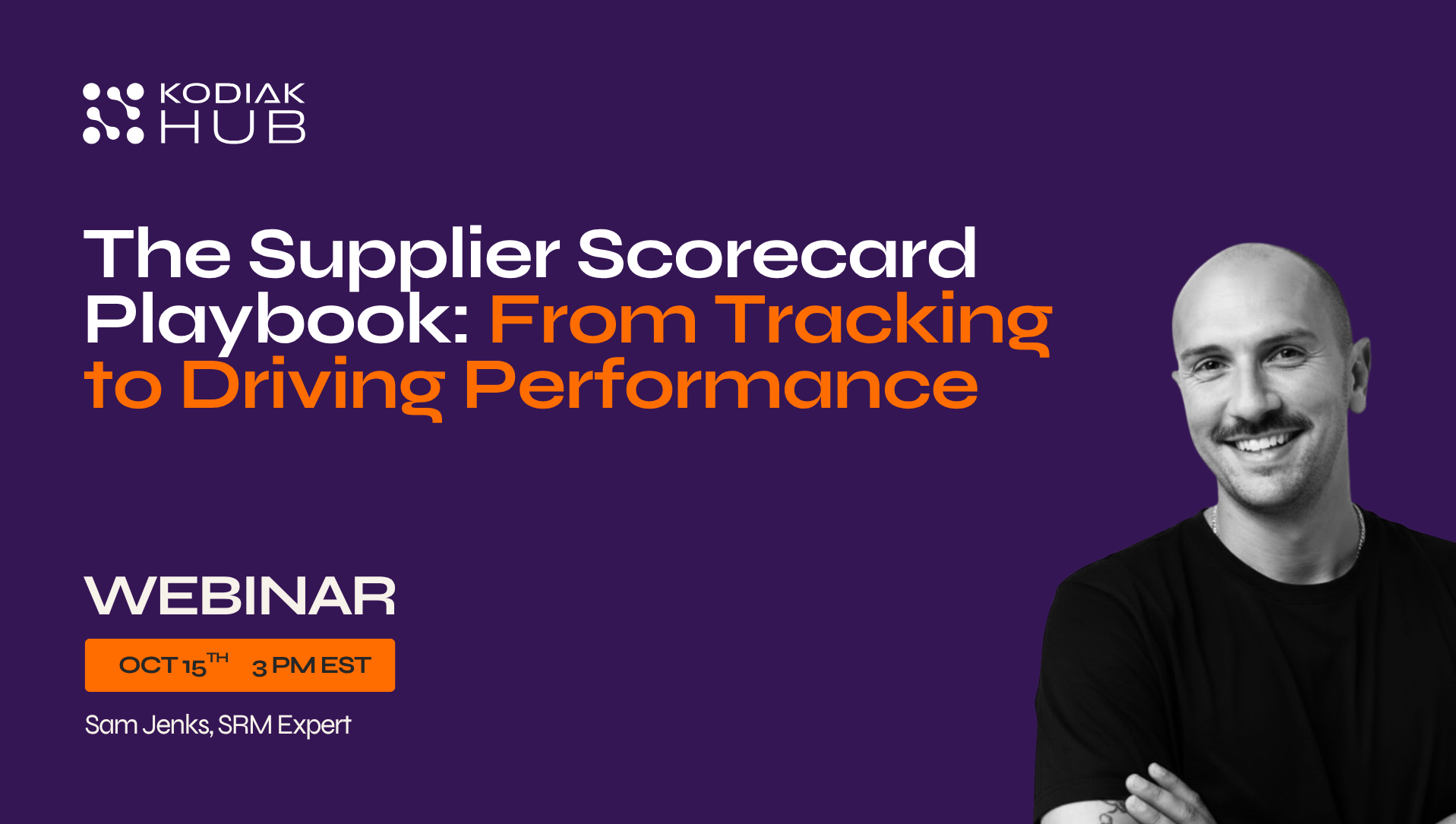
The Supplier Scorecard Playbook: From Tracking to Driving Performance (US)
A supplier scorecard can tell you that a supplier scored 68%.
Useful? Maybe. But what happens next?
That’s where many supplier scorecard programs fall short. Procurement teams spend hours collecting KPIs, chasing stakeholders for feedback, updating spreadsheets, and preparing colorful QBR slides. The score gets discussed. Everyone nods. Someone says delivery needs to improve. Three months later, the same issue shows up on the next scorecard.
A supplier scorecard should do more than track performance. It should create a repeatable process for deciding where to focus, agreeing what needs to change, assigning actions, and measuring whether those actions actually worked. That’s the difference between supplier performance reporting and supplier performance management.
And with 65% of organizations still relying on manual reporting to gather supply chain data, according to 2026 research from ISM and Amazon Business, closing that gap remains a challenge for most procurement teams.
In this session, we’ll show you how to move a scorecard program from tracking to driving performance — starting with the decision, not the metric, and ending with a repeatable loop that connects scores to real supplier improvement.
What you’ll take away
-
How to build scorecards around the decisions they should inform, not just the data that’s easiest to collect
-
Ways to combine operational data, stakeholder feedback, and risk signals into one useful picture
-
How to weight metrics by business consequence, not convenience
-
Why tracking trends matters more than chasing a single score
-
How to turn a red KPI into an owned action with a deadline and follow-up
-
How to make the scorecard the starting point for supplier reviews, not another report to prepare for them
Save your seat today!