








Quick answer
The best supplier data management software is going to be the one that suits your particular need. Kodiak Hub is for mid-market and enterprise manufacturers who want their supplier data linked to onboarding, risk and performance. Gatekeeper is for the leaner teams that just want their vendor records and contracts in one place. Semarchy is for the enterprise that wants their supplier data governed as part of a wider master data management programme.
Top 3 supplier data management picks by use case
Three quick recommendations before the full comparison. Each one leads on a different need.
Kodiak Hub
kodiakhub.comSupplier data, onboarding, risk and performance on one 360-degree record.
Best for: Mid-size and enterprise manufacturers that want supplier data to drive onboarding, compliance, performance and collaboration.
Gatekeeper
gatekeeperhq.comVendor onboarding, contracts and renewals on one record, with a native NetSuite sync.
Best for: Lean finance, procurement and legal teams that want vendor records and contracts managed together.
Semarchy
semarchy.comEnterprise MDM with vendor golden records and ERP sync.
Best for: Enterprises with IT-led data programmes that want supplier data governed alongside customer and product data.
Transparency note: Kodiak Hub is one of the platforms on this list, and we wrote it. Competitor descriptions are based on each vendor's own website and other publicly available information, listed under each review. Ratings come from G2 and Capterra and were checked on the date shown.
5 Best Supplier Data Management Software Platforms
| Platform | Key features | Best for | Type |
|---|---|---|---|
| 1 · Kodiak Hub | Supplier information, onboarding, certificates, risk, ESG and performance on one 360-degree supplier record. | Mid-size and enterprise manufacturers that want supplier data to drive onboarding, compliance, performance and collaboration. | Best-of-breed SRM |
| 2 · Gatekeeper | One record per vendor covering onboarding, contracts, renewals, spend and performance, with a native NetSuite sync. | Lean finance, procurement and legal teams that want vendor records and contracts managed together. | Contract & vendor management |
| 3 · Supplier.io | Vendor master cleansing, legal-entity matching and enrichment, plus diversity certification data and Tier 2 reporting. | Large enterprises that want to clean and enrich their vendor master and report on supplier diversity. | Supplier data & enrichment |
| 4 · Semarchy | Vendor golden records, deduplication and governance, synced across ERP, procurement and compliance systems. | Enterprises with IT-led data programmes that want supplier data governed alongside customer and product data. | Master data management |
| 5 · RightOrigins | Structured supplier QA, ESG and compliance data collection with AI document checks and multi-tier traceability. | Food and ingredients companies that need supplier certificates, QA data and traceability collected and validated. | Supplier data collection & traceability |
A Closer Look at the 5 Supplier Data Management Platforms
Kodiak Hub
Collaborative SIM and supplier performance platform · Stockholm, SwedenThis is our own product. We hold it to the same criteria as every other platform on this list.
Overview
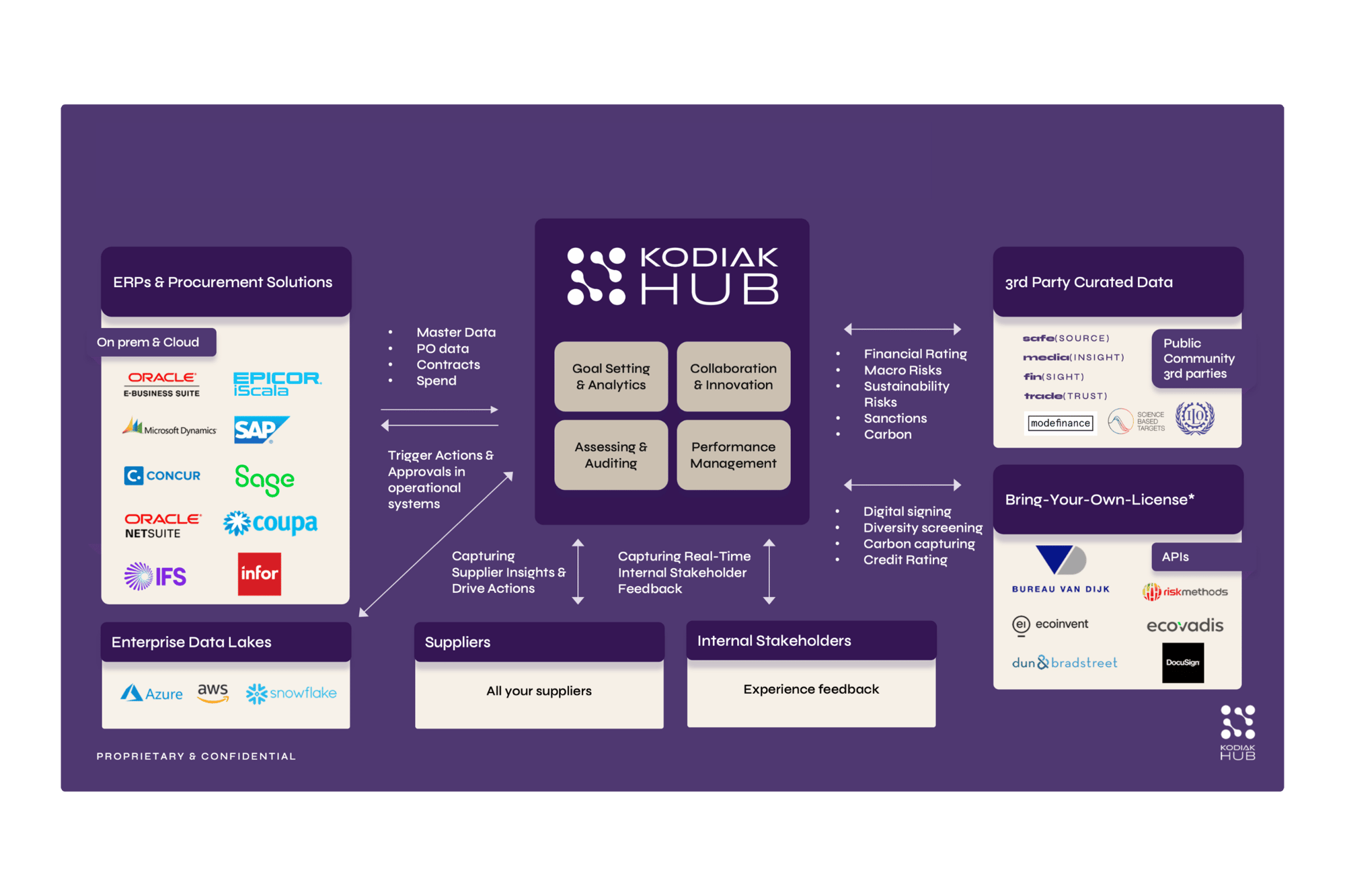
Kodiak Hub is a supplier relationship management platform founded in Stockholm in 2017. Its supplier information management sits at the centre of the platform: configurable onboarding journeys, certificate tracking, and a 360-degree supplier view that combines profile data with risk, ESG, compliance and performance.
Where many tools stop at storing and governing supplier records, Kodiak Hub connects that data to scorecards, improvement actions and supplier collaboration, so teams can act on what the data shows.
Best for
Mid-size and enterprise manufacturers that want supplier data to drive onboarding, compliance, performance and collaboration.
Key features
- Headquarters
- Stockholm, Sweden
- Founded
- 2017
- Platform type
- Best-of-breed SRM
- Company size fit
- Mid-size to enterprise
Strengths
- Supplier data connected to performance, risk and ESG in one platform
- Onboarding journeys configurable by category, region and risk level, without code
- Supplier portal and collaboration workflows, so suppliers keep their own data current
Things to consider
Kodiak Hub is built around SRM for direct-material procurement. Teams whose main need is indirect spend, e-procurement or procure-to-pay usually pair it with a separate source-to-pay or P2P tool.
Gatekeeper
Vendor and contract lifecycle management · London, United KingdomOverview
Gatekeeper is a London-based vendor and contract lifecycle management platform. It keeps each vendor's onboarding documents, due diligence, contracts, obligations, renewals, spend and performance reviews on one unified record.
A self-service vendor portal collects documents, and the platform flags expiring certificates and renewals. Gatekeeper integrates with finance and business tools such as NetSuite (two-way), Microsoft Dynamics 365, Workday and Microsoft 365. Vista Equity Partners made a growth investment in the company in 2023.
Best for
Lean finance, procurement and legal teams that want vendor records and contracts managed together.
Key features
- Headquarters
- London, United Kingdom
- Platform type
- Contract & vendor management
- Company size fit
- Mid-size
Strengths
- Vendor records, contracts and spend in one system
- Vendor portal and expiry tracking for ongoing compliance evidence
- AI agents that chase missing documents and track obligations
Things to consider
Gatekeeper is centred on contracts and vendor lifecycle rather than supplier master data. Its product pages do not describe data cleansing, enrichment or bank-detail validation, so teams with large, messy vendor masters across several ERPs should check how far it goes there.
Sources: Gatekeeper vendor onboarding, Gatekeeper integrations, Vista Equity Partners announcement
Supplier.io
Supplier diversity, intelligence and vendor master data · Oakbrook Terrace, Illinois, USAOverview
Supplier.io is a US supplier data company best known for supplier diversity data. In April 2026 it acquired TealBook and launched Atlas, a vendor master data product for entity resolution, corporate hierarchies, cleansing and enrichment.
Alongside Atlas, the platform covers diversity certification data, Tier 2 spend reporting, a supplier registration portal and supplier discovery. The Atlas page lists connections to SAP Ariba, Oracle, Coupa and Workday, and the company says its database covers more than 20 million suppliers.
Best for
Large enterprises that want to clean and enrich their vendor master and report on supplier diversity.
Key features
- Headquarters
- Oakbrook Terrace, Illinois, USA
- Platform type
- Supplier data & enrichment
- Company size fit
- Enterprise
Strengths
- Deduplication, legal-entity resolution and hierarchy mapping for vendor masters
- Long-standing depth in supplier diversity data and Tier 2 reporting
- Named connectors for SAP Ariba, Oracle, Coupa and Workday
Things to consider
Supplier.io is a data layer. Its product pages do not describe supplier onboarding or qualification workflows, contract management or performance management, so most teams use it alongside a supplier management or source-to-pay platform.
Sources: Supplier.io Atlas, TealBook acquisition announcement, Supplier.io website
Semarchy
Multi-domain master data management · Phoenix, Arizona, USAOverview
Semarchy is a master data management vendor with offices in Phoenix, London, Lyon and New Delhi. The Semarchy Data Platform, listed on review sites as Semarchy xDM, covers MDM, data governance, data quality and data integration across several data domains.
For supplier data, Semarchy builds a central vendor database with golden records, duplicate removal and standardised classifications, and keeps it in sync with systems such as SAP, Oracle and Microsoft Dynamics. Semarchy reports being named a Leader in the 2026 Gartner Magic Quadrant for Master Data Management.
Best for
Enterprises with IT-led data programmes that want supplier data governed alongside customer and product data.
Key features
- Headquarters
- Phoenix, Arizona, USA
- Platform type
- Master data management
- Company size fit
- Enterprise
Strengths
- Recognised enterprise MDM platform (vendor-reported Gartner Leader)
- Golden records and deduplication with SAP, Oracle and Dynamics sync
- Governance and compliance policies (KYC, AML, GDPR) for the vendor domain
Things to consider
Semarchy is a general MDM platform. Its supplier page does not describe a supplier portal, performance scorecards or ongoing risk monitoring, so procurement teams usually need a separate supplier management tool for those, and an MDM rollout typically involves IT.
Sources: Semarchy supplier master data management, Semarchy 2026 Gartner MQ announcement, Semarchy company
RightOrigins
AI-assisted supplier data collection and traceability · Heerlen, NetherlandsOverview
RightOrigins, a product of CIED, launched from the Netherlands in 2017 and is based on the Brightlands Smart Services Campus in Heerlen. It collects quality, ESG and compliance data from suppliers in a structured way, with automatic reminders, gap flags and AI extraction from certificates and certificates of analysis.
Its traceability products range from a tier-1 supplier view to multi-tier supplier mapping and batch-level tracing. Its customers are mainly in food, food ingredients and certification.
Best for
Food and ingredients companies that need supplier certificates, QA data and traceability collected and validated.
Key features
- Headquarters
- Heerlen, Netherlands
- Founded
- 2017
- Platform type
- Supplier data collection & traceability
- Company size fit
- Mid-size to enterprise
Strengths
- AI extraction and validation of supplier certificates and CoAs
- Built-in chasing and gap tracking for supplier submissions
- Tier-1, multi-tier and batch traceability in one product line
Things to consider
RightOrigins leans towards QA and compliance data collection in food and ingredients. Its product pages do not name specific ERP connectors or describe supplier master data governance or performance management, and it has no public user reviews yet.
Sources: RightOrigins supplier data management, RightOrigins traceability, About CIED
How we compared these platforms
We looked at each platform against the same five criteria, using the vendor's own product pages, press releases and third-party review sites. We did not receive payment from any vendor for inclusion.
-
Data collection and validation
Configurable supplier data fields, questionnaires, document collection, review steps and audit trails.
-
Onboarding workflows
Whether onboarding can differ by supplier type, category, country and risk level.
-
Risk and compliance monitoring
Certificate expiry alerts, compliance tracking, ESG data and risk indicators that keep records current.
-
ERP and system integration
How the platform keeps one governed supplier record in sync with ERP, P2P and other systems.
-
360-degree supplier view
How well supplier data connects to performance, risk and collaboration, not just storage.
Choosing the right supplier data management software
The best supplier information management software is not always the biggest platform. It is the one that fits your supplier base, data complexity and procurement maturity. Three questions help narrow the list.
1. How complex is your supplier data?
A company with 500 mostly local suppliers has very different needs from a global manufacturer with 50,000 suppliers across entities, categories and production sites. Map how many ERPs hold supplier data, how many records are duplicated, which documents expire regularly and how much is still kept in spreadsheets.
- If the main problem is supplier master data chaos, prioritise governance, validation and ERP integration, and see how to consolidate supplier data.
- If the main problem is visibility, collaboration and performance, prioritise 360-degree supplier scorecards, supplier portals and action workflows.
2. What will the supplier experience be like?
If the supplier portal is hard to use, suppliers will not keep their data updated, and your team will go back to chasing it by email. Look for a portal that is clear, fast and only asks each supplier type for what is relevant. Supplier onboarding is usually where this shows first.
3. Do you need a dedicated platform or a broader suite?
A suite module or an MDM tool can be enough if the goal is clean records and basic onboarding. If you want supplier data to improve resilience, sustainability, performance and collaboration, a dedicated supplier management platform is a better fit. Read more about the benefits of supplier information management software.
FAQs
What is supplier data management software?
Supplier data management software, also called supplier information management (SIM) software, is a central platform for collecting, validating, updating and sharing supplier information. That covers master data such as legal entity, tax, bank and contact details, plus strategic data such as certificates, ESG and risk information, so every team works from the same supplier record.
What is the difference between SIM and SRM?
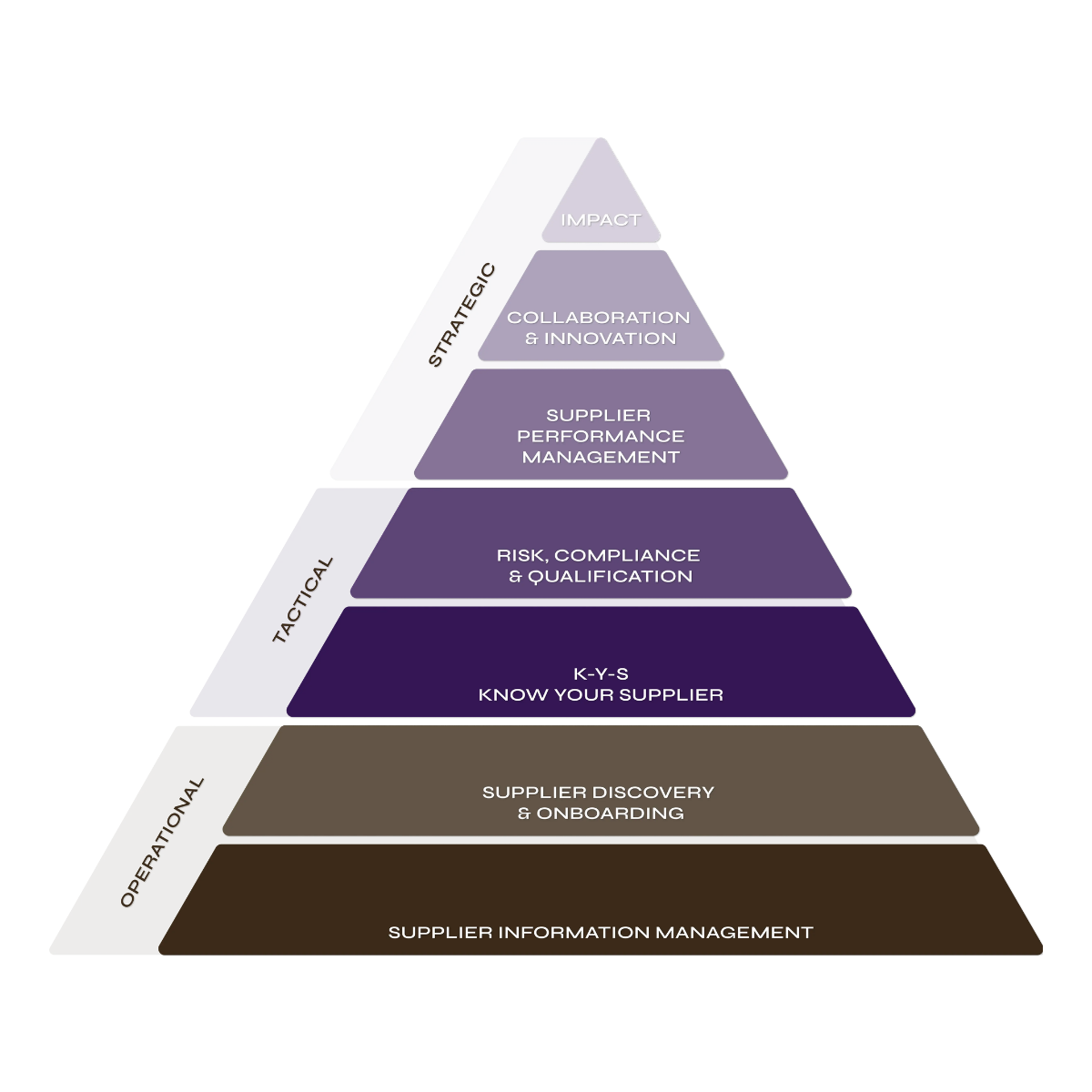
Supplier information management (SIM) is about the data: who your suppliers are, whether their data is complete and whether their certificates are valid. Supplier relationship management (SRM) builds on that data to manage performance, risk, collaboration and improvement. Read more in What is Supplier Relationship Management (SRM)?
How is supplier data management different from master data management (MDM)?
MDM platforms govern master data across many domains, such as customers, products and suppliers, and are usually run by IT or data teams. Supplier data management tools are built for procurement and include supplier portals, onboarding workflows and document collection, so suppliers can maintain their own information.
What supplier data should a SIM platform hold?
At a minimum: company and legal entity details, tax and VAT information, bank details, contacts, locations and categories. Most teams also track quality and ESG certificates, insurance documents, financial health and risk indicators, compliance documentation and supplier segmentation.
Does supplier data management software integrate with ERP systems?
Most platforms integrate with ERPs such as SAP, Oracle and Microsoft Dynamics, and with P2P tools. The goal is to keep one governed supplier record and push clean, validated data into the systems that need it, instead of every system keeping its own version.
How do I choose the right supplier data management software?
Start with the problem you most need to solve, such as duplicate records, slow onboarding, expiring certificates or limited visibility. Then compare platforms on data validation, onboarding workflows, ERP integration and supplier experience, and ask for demos using your own supplier data.