
.png?width=750&height=750&name=Thought%20Leadership%20(3).png)


.png?width=750&height=750&name=Webinar%20Linkedin%201x1%20(3).png)


.png?width=1200&height=1200&name=Webinar%20Linkedin%201x1%20(6).png)

.png?width=750&height=750&name=Webinar%20Linkedin%201x1%20(11).png)
.png?width=2000&name=3x2%20Images%20(4).png)

.png?width=1200&height=1200&name=Webinar%20Linkedin%201x1%20(10).png)

If you are still managing supplier quality via fragmented email threads, static spreadsheets, and scattered PDF audit reports, you are operating with a massive blind spot.
In 2026, supply chain agility requires real-time visibility. When a non-conformance issue arises, you need to know immediately, trigger a Corrective and Preventive Action (CAPA), and track the resolution in a centralized hub. That is exactly what modern Supplier Quality Management (SQM) software is built to do.
But with so many tools on the market, choosing the right platform can be overwhelming. Some systems are built for agile procurement teams, while others are rigid, legacy platforms designed strictly for heavy manufacturing or FDA compliance.
To help you navigate the market, we have broken down the 7 best supplier quality management software tools available today.
At a Glance: Top SQM Software Comparison
| Software Provider | Best For... | Standout Feature | User Interface (UI) | Implementation Speed |
| 1. Kodiak Hub | Mid-Market & Enterprise Global Procurement (€100M–€5B) | Unified Quality, Sustainability (CSDDD) & CAPA | Modern Cloud (High Cross-Functional Adoption) | Fast (Ideal for replacing homegrown tools) |
| 2. ETQ Reliance | Internal Factory Floor QMS | Deep Customization for Production Processes | Complex / Legacy | Slow (Heavy IT Dependency) |
| 3. MasterControl | Medical Device & Strict FDA Life Sciences | 21 CFR Part 11 Compliance | Rigid / Compliance-Focused | Moderate to Slow |
| 4. SAP Ariba | Massive Enterprises (>€5B Revenue) | Native SAP ERP Integration | Complex / Steep Learning Curve | Very Slow (Multi-Year) |
| 5. AssurX | Hyper-Regulated NERC/FERC Compliance | Closed-Loop Regulatory Workflows | Dated / Traditional | Moderate |
| 6. Intelex | EHS (Environmental, Health & Safety) Teams | Workplace Incident Reporting | Standard | Moderate |
| 7. Cority | Salesforce-Exclusive IT Ecosystems | Modular Quality Suite | Standard Salesforce UI | Moderate |
A Detailed Look at the Best Supplier Quality Management Software Tools in 2026
1. Kodiak Hub
Best for: Modern procurement teams seeking an intuitive, highly automated, and collaborative approach to supplier performance and quality.
Kodiak Hub is a cloud-based Supplier Relationship Management (SRM) platform with a powerhouse suite dedicated to supplier quality. Unlike legacy QMS systems that feel like navigating a 1990s database, Kodiak Hub is designed with a modern, consumer-grade user interface that guarantees high adoption rates internally and across your supplier base.
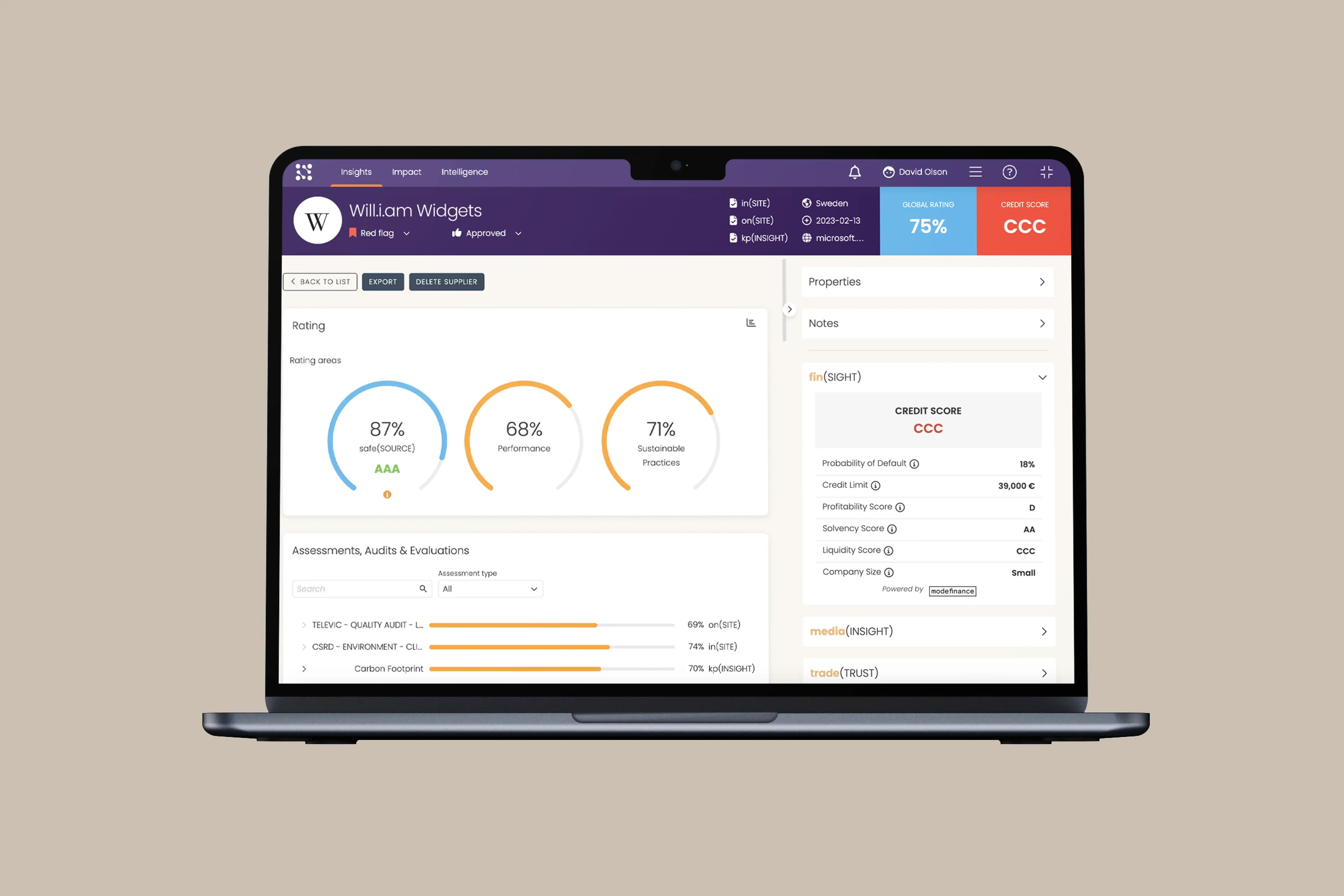
The platform excels at taking proactive quality measures. You can automate pre-qualification workflows, conduct robust supplier audits, and instantly generate dynamic performance scorecards. When defects do occur, the centralized CAPA tracking ensures that no corrective action gets lost in an inbox.
Strengths:
- Automated Onboarding & Audits: Trigger self-assessments and ISO compliance checks before a supplier is even approved.
- Dynamic Scorecards: Instantly visualize quality data (PPM, OTIF) alongside risk and sustainability metrics.
- Seamless CAPA Tracking: A collaborative portal where you and your suppliers can resolve 8D and non-conformance issues in real-time.
- Beautiful UI/UX: Built for procurement professionals, resulting in significantly faster implementation and user adoption.
Weaknesses:
- Kodiak Hub is a purely cloud-based SaaS solution. If your IT policy requires strict, on-premise software hosting, this will not be a fit.
The Verdict: If you want to transition from reactive quality control to proactive supplier collaboration without suffering through a two-year IT implementation, Kodiak Hub is the premier choice. Just ask the global procurement team at Elfa, who increased their supplier quality by 20% after making the switch.
Learn more about our supplier quality management software.
2. ETQ Reliance
Best for: Heavy manufacturing organizations that require deep, complex, enterprise-wide Quality Management Systems (QMS).
ETQ Reliance is one of the oldest and most established names in the quality management space. It is a highly customizable, heavyweight platform that connects internal manufacturing quality with supplier quality.
Strengths:
- Incredibly robust and customizable to fit highly specific, complex manufacturing workflows.
- Strong document control and training management modules.
Weaknesses:
- The Learning Curve: Because it is so complex, the user interface can feel clunky and overwhelming for standard procurement users.
- Implementation Time: Deploying ETQ can be a massive IT project requiring significant resources and time.
3. MasterControl
Best for: Highly regulated industries like Life Sciences, Pharmaceuticals, and Medical Device manufacturing.
If you operate in an industry where a quality failure means severe regulatory fines (or worse), MasterControl is the gold standard. It is built from the ground up for strict FDA and ISO compliance.
Strengths:
- Unbeatable audit trails and electronic signature tracking for regulatory compliance (21 CFR Part 11).
- Rigorous, locked-down document management.
Weaknesses:
- Rigidity: It is built for strict compliance, not for agile procurement. It can be overly rigid for companies outside of the life sciences sector.
- Cost: It carries a premium price tag that is often hard to justify for non-regulated industries.
4. SAP Ariba (Supplier Risk & Quality)
Best for: Massive enterprises already deeply entrenched in the SAP ecosystem.
SAP Ariba is the behemoth of procurement software. While primarily known for source-to-pay, their supplier risk and quality modules offer enterprise-grade capabilities for managing supplier data at a massive scale.
Strengths:
- If you already use SAP ERP, the native integration and data flow are incredibly powerful.
- Built to handle tens of thousands of suppliers globally.
Weaknesses:
- Notoriously Complex: SAP Ariba is famous for its complexity. User adoption is often a struggle because the system is not intuitive.
- Agility: Making changes or customizing workflows usually requires dedicated IT support or expensive consultants.
5. AssurX
Best for: Energy, utilities, and highly regulated manufacturing sectors.
AssurX is a versatile Quality Management and Regulatory Compliance system. It does a solid job of linking supplier quality events directly to internal production systems to track the complete lifecycle of a non-conformance issue.
Strengths:
- Strong out-of-the-box workflows for NERC (North American Electric Reliability Corporation) and FDA compliance.
- Good traceability from a supplier defect down to the final product.
Weaknesses:
- The interface feels dated compared to modern SaaS alternatives.
- Can be overkill for businesses that primarily need collaborative supplier scorecards and audit tracking rather than deep internal manufacturing compliance.
6. Intelex
Best for: Companies looking to merge Quality Management with Environmental, Health, and Safety (EHS) tracking.
Intelex is primarily known as an EHSQ software. If your procurement strategy relies heavily on auditing suppliers for environmental compliance and workplace safety alongside product quality, Intelex offers a unified platform.
Strengths:
- Excellent for tracking supplier sustainability and safety certifications.
- Strong incident reporting workflows.
Weaknesses:
- Supplier quality is just a fraction of what Intelex does. It lacks the deep, procurement-first focus of dedicated SRM platforms, meaning its supplier collaboration tools can feel like an afterthought.
7. Cority (Quality Suite)
Best for: Mid-to-large enterprises looking for a modular approach to quality and EHS.
Formerly known in the quality space through their acquisition of Qualityze (and Sparta Systems' legacy tech), Cority offers an enterprise-grade suite built on the Salesforce platform.
Strengths:
- Because it leverages Salesforce architecture, it is highly secure and integrates well if your company runs on a Salesforce backbone.
- Strong analytics and dashboarding capabilities.
Weaknesses:
- Pricing is heavily modular. By the time you add on supplier audits, CAPA, and document control, the cost can escalate quickly.
- Geared more heavily toward internal factory quality than external supplier collaboration.
How to Choose the Right SQM Software for Your Team
When evaluating the market, the decision shouldn't just be about checking boxes on a feature list. It comes down to your operational maturity, your regulatory landscape, and how your global teams actually work.
If your direct material spend dictates the quality of your final product, you cannot afford to use the wrong tool for the job.
- Choose a legacy QMS or eQMS when your primary need is highly regulated internal quality management - for example, medical device manufacturing with strict FDA requirements, electronic records controls, validation, and factory-floor quality workflows.
- When to choose Kodiak Hub: If you are a category-led procurement organization (€100M–€5B) looking to graduate from fragmented spreadsheets and homegrown tools, you need a modern platform your global team will actually adopt. If your goal is to unite the "Holy Trinity" of Procurement, Quality, and Sustainability - automating Corrective Action Plans, managing strategic direct materials, and effortlessly proving compliance for legislation like CSDDD or CSRD - Kodiak Hub is the clear winner.
Stop letting scattered data, manual audits, and reactive supplier defects dictate your supply chain risk. Align your procurement strategy and take control of your supplier quality today.
Frequently Asked Questions About Supplier Quality Management Software
What is the difference between a QMS and SQM software?
A standard Quality Management System (QMS) is primarily focused on internal processes—ensuring your own factory floor or service delivery meets quality standards. Supplier Quality Management (SQM) software is externally focused. It is designed specifically for procurement and supply chain teams to audit, monitor, and collaborate with third-party vendors before their materials ever reach your facility.
What are the must-have features in supplier quality software?
While features vary by industry, any modern SQM platform should include:
- Automated Supplier Onboarding: To verify certifications (like ISO 9001) upfront.
- Audit Management: Tools to schedule, execute, and score supplier audits.
- CAPA Tracking: A centralized system to issue and track Corrective and Preventive Actions.
- Dynamic Scorecarding: Real-time dashboards that track metrics like PPM (Parts Per Million) defect rates and OTIF (On-Time In-Full) deliveries.
How much does supplier quality management software cost?
Pricing varies drastically based on the deployment method. Legacy, on-premise systems like SAP or ETQ can cost hundreds of thousands of dollars to implement, plus heavy maintenance fees. Modern, cloud-based SaaS platforms like Kodiak Hub typically operate on an annual subscription model based on the number of users or suppliers, offering a much faster ROI and significantly lower upfront implementation costs.
Can SQM software integrate with my existing ERP?
Yes. The best supplier quality platforms act as a specialized layer that integrates seamlessly via API with major ERPs (like SAP, Oracle, or Microsoft Dynamics) to pull master vendor data and push quality scores back into the broader system.